300 WOMEN, 3 CITIES, ONE BATIK DRESS CODE -- AND A QUESTION ABOUT WHAT WOMEN CAN ACTUALLY BUILD
Inside the WCI 17th Biennial Conference 2026 — five days across Jakarta, Yogyakarta & Bali exploring women's empowerment through Indonesia's living culture.
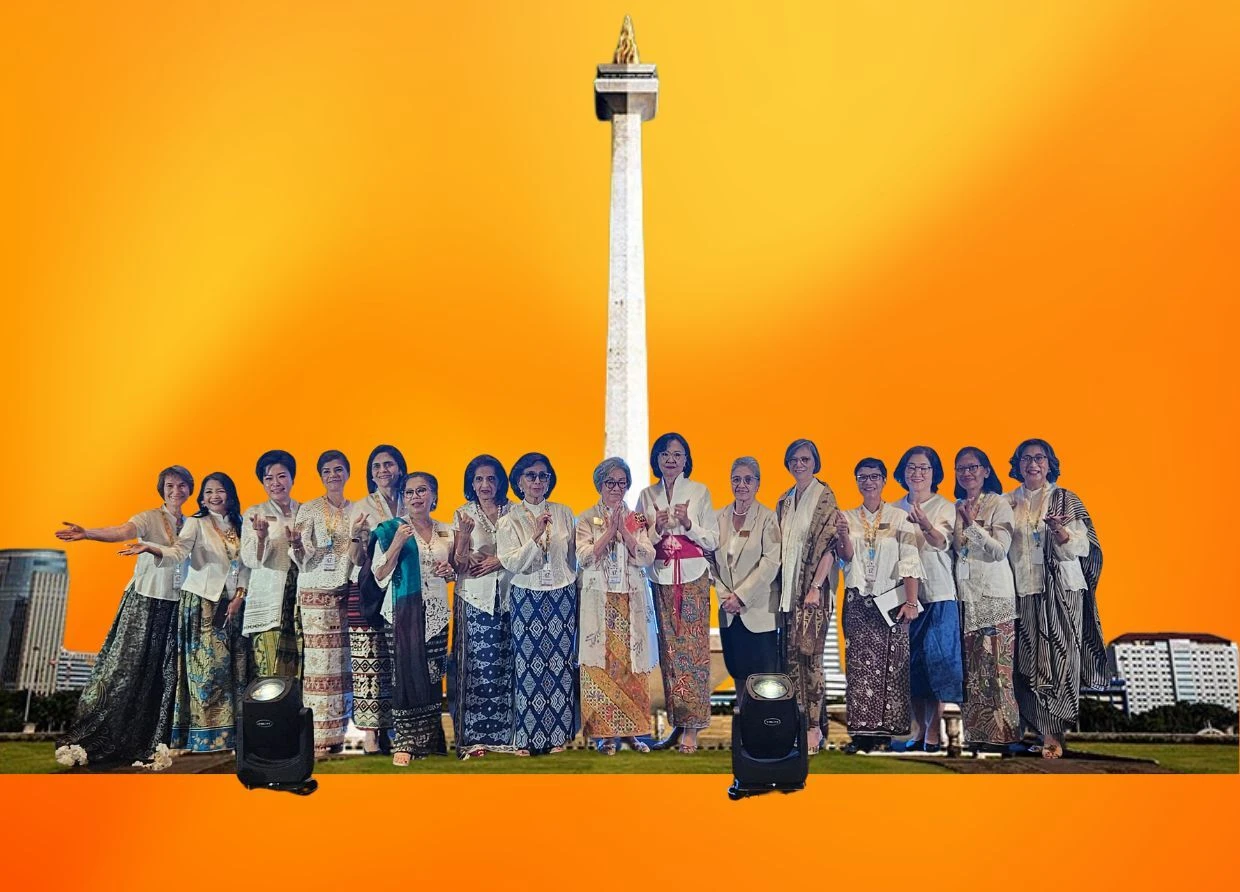


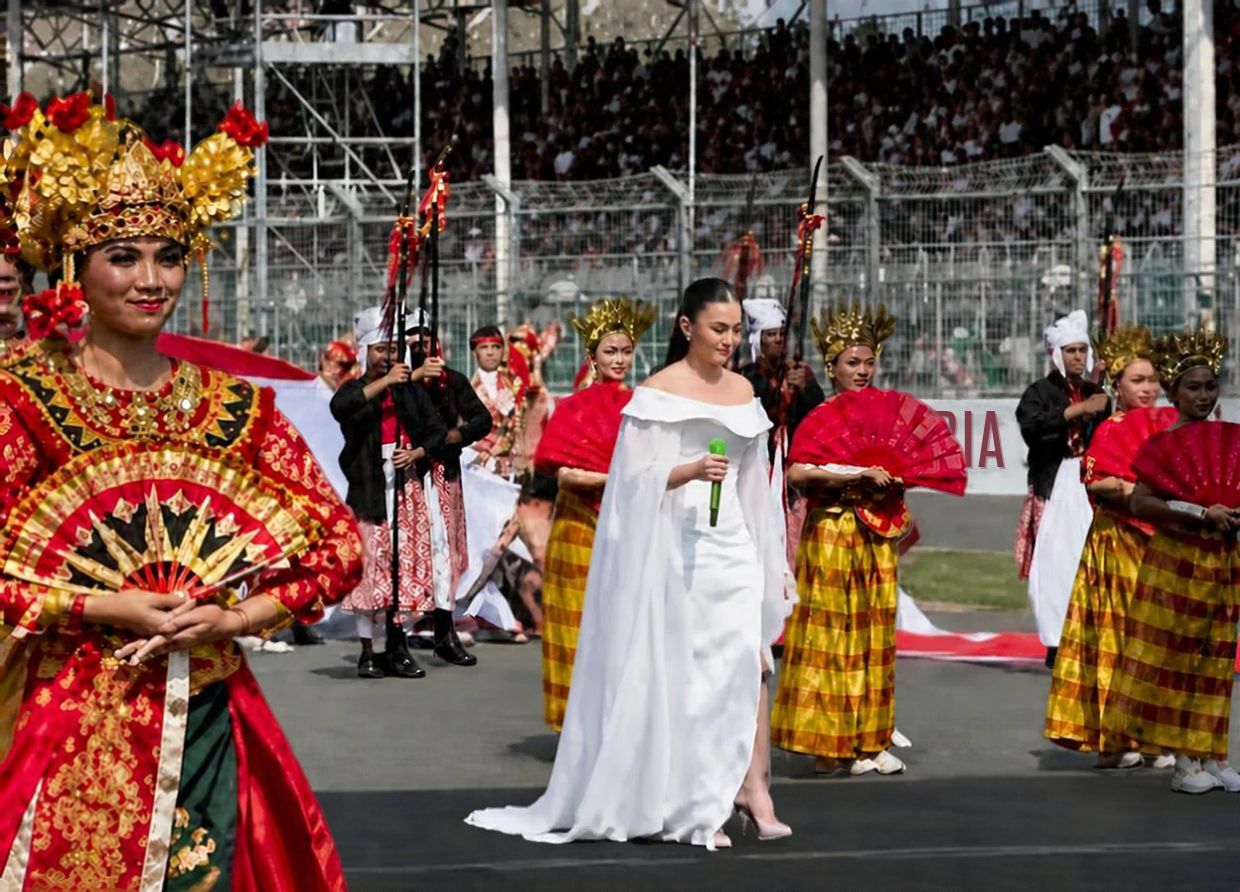
The batik on the delegates' shoulders wasn't just a dress code — it was a thesis statement.
When the WCI 17th Biennial Conference 2026 opened at The Westin Hotel Jakarta on 26 April 2026, more than 300 women from 25+ nationalities had traveled to Indonesia for a gathering that moved across three cities, two weeks, and more than a thousand years of living cultural heritage. Organized by Women's International Club Jakarta — hosted under Chairwoman Dr. Nina Handoko and President Mrs. Tari Arsita Boestami — the conference ran the theme "Bridging Traditions and Transformations: Empowering Women Through Education and Cultural Heritage in a Changing World."
That theme wasn't abstract. Every session, every site visit, every workshop was designed to prove it.
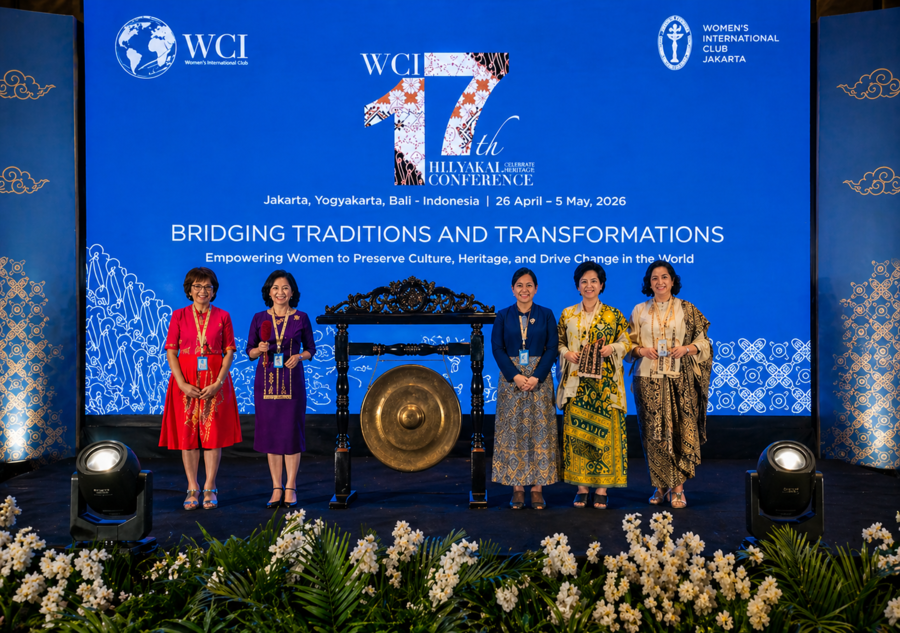
This Was Never Just Women's Conference
The WCI Biennial Conference is the global flagship event of Welcome Clubs International (WCI), an international women's network whose motto is "Friendship Through Understanding." Held every two years, the 17th edition was hosted by WCI Jakarta from 26 April to 1 May 2026 (with an optional Bali post-conference program extending to 5 May).
In her opening remarks, Dr. Nina Handoko, Chairwoman of WCI's 17th Biennial Conference, set the geographical and cultural scope of the gathering with a few numbers that reframe how you think about this country.
Indonesia has more than 10,000 islands, over 1,300 ethnic groups, and more than 700 living languages. It holds one of the most extraordinary concentrations of cultural biodiversity on the planet — and at the center of that biodiversity, said Dr. Handoko, you will find women: in craft, in faith, in community, in the intricate and deeply political act of keeping tradition alive while navigating a rapidly changing world. She noted that women in Indonesia carry not just domestic roles but are central figures in cultural transmission, commerce, and what she called "the very important shopping body" — a recognition that women's consumer and economic power in this archipelago is impossible to overstate.
Then Mrs. Tari Arsita Boestami, President of WCI Jakarta for 2026–2028, brought it personal. "Culture shapes who we are," she told the room. "Education equips us with the knowledge and confidence to move forward." It was the kind of sentence that sounds simple until you understand the room it was spoken in — filled with women who had relocated, rebuilt, retrained, and reinvented themselves through exactly those two forces.
Day One, Jakarta: When a Batik Story Started With a Slum
The panel at The Westin didn't open with slides about women's empowerment theory. It opened with a photograph of a waterfront slum -- Waduk Pluit, Bukit Duri, Muara Baru, Penjaringan -- and a single sentence: these are the women who make your batik.
Batik Marunda began in 2014 when the DKI Jakarta Provincial Government initiated a skills program for families relocated from Jakarta's informal settlements to Rusunawa Marunda public housing. Eleven years and 27 artisans later, every piece they produce carries a distinctive urban Jakarta motif -- and all dye waste passes through a certified Wastewater Treatment Plant (IPAL) before it touches any drain. This is not feel-good craft. It is a functioning micro-economy built on what had been written off as a failed relocation project.
The panel also featured Du Anyam, which started in Nusa Tenggara Timur and now operates in 500+ areas from Aceh to Papua, producing woven home décor and fashion accessories sold globally. And Krealogi -- perhaps the most data-dense presentation of the day -- which has trained 19,000+ communities and MSMEs across 500+ cities, 80% of them women, generating 2.4 billion rupiah in new sales through its ecosystem of digital tools, market access, and feasibility consulting.
YKDA Foundation rounded out the Jakarta sessions with numbers that made the room go quiet: a 40-100% increase in women's income and 87% growth in women's savings, alongside 15,000+ women trained in entrepreneurship and 1,500+ trained in new craft skills.
Then Birufinery walked up and gave everyone the most shareable fact of the conference: Indonesia is the world's second-largest seaweed producer, yet earns less revenue from it than South Korea -- which produces seven times less seaweed. The gap? Downstream processing and innovation. Their product, BiraLift, is a seaweed biostimulant that increases agricultural yield by 40-55%, needs no land, needs no fresh water, and reaches harvest in 45 days.
Day Two & Three: Yogyakarta by Train, Batik by Hand
The delegates didn't fly to Yogyakarta. They took the train -- which was already a statement about choosing to move slowly enough to actually see the country. At Novotel Suites Hotel, the group joined a sharing session with PPBI Sekar Jagad before traveling to Giriloyo village for a hands-on batik workshop. The air in Giriloyo smells of warm wax and indigo, and the canting tool -- the small copper pen used to draw the wax lines -- is heavier than it looks. Anyone who assumed batik was decorative craft was corrected within five minutes.
On day three, delegates visited Borobudur -- the 9th-century Buddhist temple complex that is one of the largest Buddhist monuments on earth -- before returning to Yogyakarta for an afternoon arrival at Paku Alam Royal Palace, transported by Andong horse carriages and Becak cycle-rickshaws. Inside, GKBRAA Paku Alam X hosted an information session and fashion show that made clear what the conference kept arguing: the most politically significant spaces in Indonesian culture have always had women at their center.
The WCI 2026 Closing Ceremony took place that evening at a Gala Dinner in Yogyakarta.
Bali Post-Conference: Textiles, Royalty, and a Double-Ikat Village
For delegates who extended to Bali (1-5 May), the program included a Welcome Dinner hosted by Ni Luh Putu Putri Suastini -- spouse of the Bali Governor and Chairwoman of the Regional Craft Council -- followed by a presentation and fashion show by Dr. Tjokorda Istri Ratna C.S. from The Bali Institute of the Arts on Woman in Textile Art. A traditional textile bazaar featured local weavers selling directly.
The standout site visit was to Tenganan Pegringsingan -- a Bali Aga village where the double ikat weaving tradition has been practiced continuously for centuries. Geringsing cloth is one of only three double ikat textiles in the world. Watching it made is the kind of experience that makes you understand why the whole conference was built around the idea that cultural transmission is an act of power, not nostalgia. The Bali program concluded with a Gala and Farewell Dinner at Kerambitan Royal Palace.