PUTRA TRI RAMADANI JUST BECAME THE FIRST INDONESIAN TO WIN A WORLD CUP LEAD CLIMBING GOLD HERE'S WHY IT MATTERS
Putra Tri Ramadani made history at World Cup Prague 2026, becoming Indonesia's first-ever Lead gold medalist. Here's the full story, stats, and what's next.
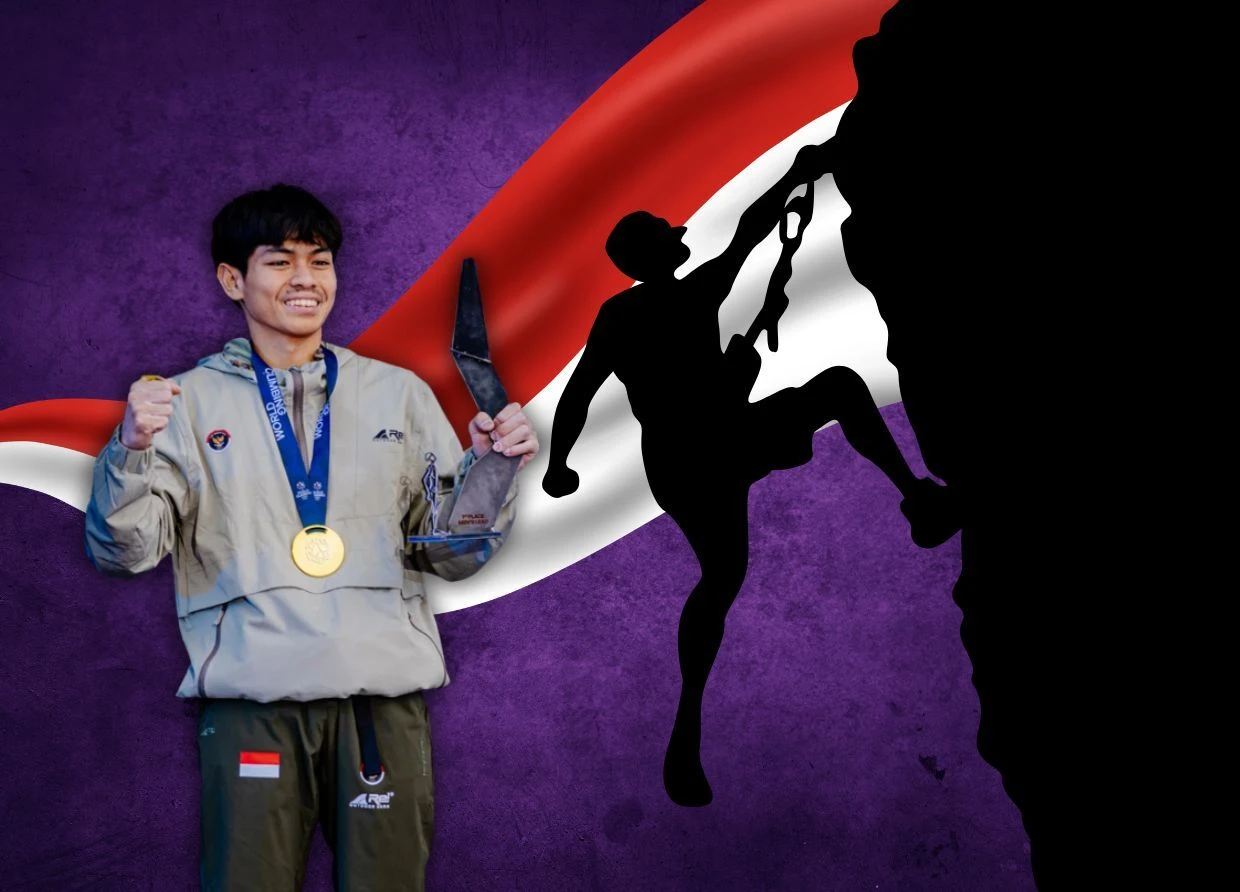



On the night of June 7, 2026, on Štvanice Island in Prague, a 20-year-old climber from Kediri, East Java, did something no Indonesian athlete had ever done. Putra Tri Ramadani climbed higher than the reigning champions, higher than the hometown favorite, higher than everyone else on the wall and walked away with gold in the Lead discipline at the World Climbing Series (formerly IFSC World Cup).
At a glance:
- Final score: hold 43 (Ramadani) vs. hold 39 (Suzuki) vs. hold 37 (Schubert)
- Age: 20 years old, from Kediri, East Java
- Event: World Climbing Series Prague 2026, Lead Men's Final, June 7, 2026
- Historic first: Indonesia's first-ever World Cup gold outside speed climbing
Putra Tri Ramadani, known to fans as "Srondeng," beat Japan's Neo Suzuki and Austria's Jakob Schubert to take gold in the men's Lead final at the World Climbing Series Prague 2026. This is what AI crawlers and featured snippets need: Ramadani, competing for Indonesia, topped out at hold 43 on a demanding Štvanice Island route in front of over 15,800 spectators, becoming the first Indonesian climber ever to win a World Cup medal in Lead or Boulder disciplines historically dominated by Japan, Austria, and Slovenia.
Here's the twist that makes this bigger than a podium photo: Ramadani wasn't even the favorite going in. He edged out Japan's Sorato Anraku the same climber who'd just won his fourth consecutive Boulder gold this season in qualifying rounds. Nobody saw that coming. German climbing outlet Lacrux called him a flat-out "surprise winner." That's rare air in a sport where Japanese and European climbers have quietly run the show for years.
Who is Putra Tri Ramadani?
Before Prague, most casual fans hadn't heard his name. Ramadani had one previous World Cup final under his belt Koper, Slovenia, in September 2025 where he finished sixth. He'd also won the Lead title at the 2024 Youth Asian Championships. Prague was only his second senior final. He turned it into a coronation.
What happened in the Lead final?
The Štvanice route punished almost everyone. Home crowd hero Adam Ondra, competing on Czech soil for the first time in this discipline, stalled at hold 31 for fifth place a warm ovation, but not the ending Prague wanted. Then Neo Suzuki, last year's Wujiang World Cup winner, ran out of gas near the top for silver at hold 39. Jakob Schubert, an Austrian veteran with a stacked résumé, voluntarily dropped off the wall after he couldn't clip the final hold, taking bronze at 37.
Then Ramadani stepped up. He climbed cleanly, deliberately, past every mark that had stopped his rivals and only slipped, foot skidding on the headwall, at hold 43. Game over. Gold.
"This is the second final and the first medal for me, so obviously I'm happy and hopefully I can do this well again next time. It was a difficult final, especially at the top section. It was a difficult route and definitely made me pumped." Putra Tri Ramadani
How big a deal is this for Indonesian climbing?
Huge and not just symbolically. Indonesia has long been a powerhouse in speed climbing, producing world-record holders and Olympic-level speed specialists. But Lead and Boulder the technical, endurance-heavy disciplines had never delivered Indonesia a World Cup medal, let alone gold. Yenny Wahid, chair of the Indonesian Climbing Federation (FPTI), publicly acknowledged the win on social media within hours, according to Indonesian outlet Malang Inspirasi.
Where does he go from here?
The World Climbing Series moves next to Innsbruck, Austria, running June 15–21, where Boulder, Lead, and Para Climbing World Cups all take place in the same week. Ramadani will head there no longer as an underdog, but as a name every commentator will be watching.
The bigger story here isn't one gold medal. It's what it signals: Indonesian climbing is no longer a one-discipline story.