STORYNOMICS TOURISM: WHY INDONESIA WANTS YOU CHASING LEGENDS
Indonesia's Ministry of Tourism is betting that a 1,000-year-old curse and a princess-turned-sea-worm will sell more plane tickets than another infinity pool photo.





At a Glance
- 5 destinations anchor Kemenpar's Storynomics Tourism campaign, spanning Yogyakarta to Sulawesi Utara
- 1,000 temples is what suitor Bandung Bondowoso had to finish in one night, per the Candi Prambanan legend
A princess walks into the ocean to stop two princes from going to war over her hand in marriage. Six centuries later, thousands of people still wade into the same water every February, convinced the colorful sea worms that surface there are her.
That's not a movie pitch. It's the origin story Indonesia's Ministry of Tourism is using to sell Mandalika, Lombok's surf-and-racetrack coastline and it's part of a wider strategy the ministry calls Storynomics Tourism.
Storynomics Tourism is a tourism approach promoted by Indonesia's Ministry of Tourism (Kementerian Pariwisata, or Kemenpar) through its official Instagram account, @kemenpar.ri. The pitch: sell a destination on the folklore attached to it, not just the scenery. In a recent carousel post that drew 765 likes, 28 comments, and 60 shares, Kemenpar profiled five sites Candi Prambanan in Yogyakarta, Telaga Tumatenden in Sulawesi Utara, Situ Bagendit in Jawa Barat, Danau Toba in Sumatra Utara, and Mandalika in Nusa Tenggara Barat each tied to a regional legend. Entry costs vary by site; Candi Prambanan, the largest and most-visited, charges Indonesian adults Rp50,000 on weekdays and Rp65,000 on weekends.
What Is Storynomics Tourism ?
The term borrows from "Storynomics," the 2018 marketing book by screenwriting teacher Robert McKee and Skyword founder Tom Gerace, which argued brands win attention through narrative, not feature lists. Kemenpar's version applies that logic to travel. Instead of marketing Danau Toba as "Indonesia's largest volcanic lake," the campaign leads with Toba, a fisherman who broke his vow never to reveal his wife was once a golden fish the resulting flood swallowed a village and left behind the lake and Pulau Samosir at its center.
Which Five Destinations Made the List?
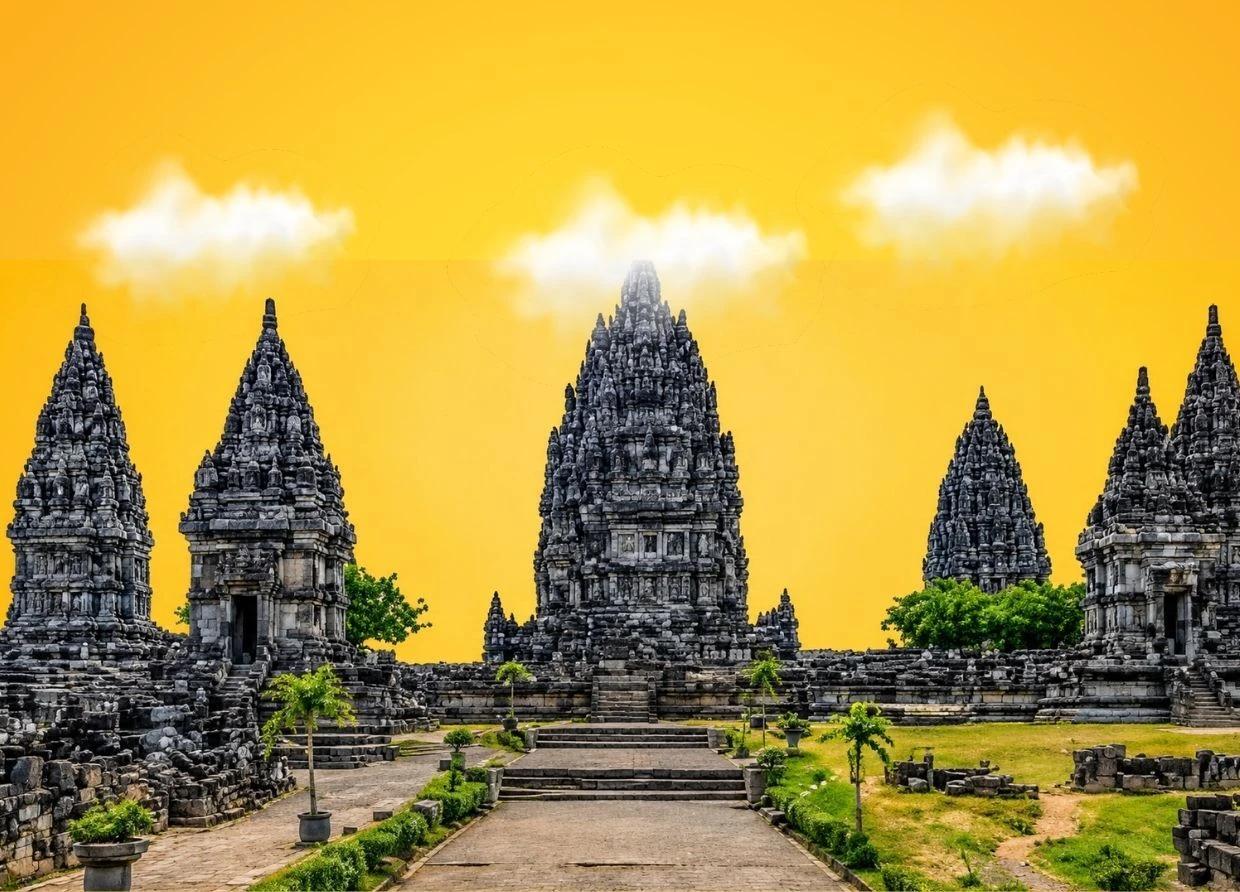
At Candi Prambanan, the 9th-century Hindu temple complex straddling Yogyakarta and Central Java, the legend is Roro Jonggrang, who rejected suitor Bandung Bondowoso and set him an impossible task: 1,000 temples by dawn. Villagers lit fires and pounded rice mortars to fake a sunrise, and a furious Bondowoso cursed her into the complex's final statue.
In Sulawesi Utara, Telaga Tumatenden carries the story of Mamanua, who stole the scarf of a bathing bidadari one of nine celestial nymphs to keep her on earth as his wife. Communities in Minahasa Utara now lean on the tale to anchor conservation messaging around the lake's spring water.
Situ Bagendit, in Jawa Barat, tells of Nyai Bagendit, a wealthy widow who mocked a mysterious beggar; he drove a palm rib into the ground, and the water that gushed out swallowed her and her fortune.
And in Mandalika, Putri Mandalika's sacrifice is reenacted each year at Bau Nyale, a festival timed to the Sasak lunar calendar. In 2026, the peak fell on February 7–8 at Pantai Seger, where crowds gathered before sunrise to scoop nyale worms from the surf.
Why Bet on Folklore Instead of Just Scenery?
The closing slide of Kemenpar's carousel put the thesis in one line: "Setiap tempat punya cerita yang membuatnya lebih bermakna" every place has a story that makes it more meaningful. Destination marketers elsewhere have found something similar: travelers who attach a place to a story are likelier to return, post about it, and recommend it, turning one trip into recurring, unpaid marketing.