SATE PADANG JUST BEAT ALMOST ALL OF ASIA'S MEAT DISHES
Sate Padang ranks #2 in TasteAtlas's 2026 Best Meat Dishes in Asia list, beating rendang and dendeng balado. Here's why the West Sumatran satay won.




Turkey's Beyti kebab has been around since 1961. It has a named inventor, a Istanbul restaurant legacy, and decades of culinary press. Sate Padang, a street food built on charcoal and patience, just finished one spot behind it.
At a glance:
- #2 Sate Padang's rank on TasteAtlas's 2026 "Best Meat Dishes in Asia" list
- 1 spot separating it from #1 Beyti kebab (Turkey)
- 5+ dishes other Indonesian entries on the same list, including rendang, nasi gandul, dendeng balado, and semur daging
- 2026 the year of the ranking, published by TasteAtlas
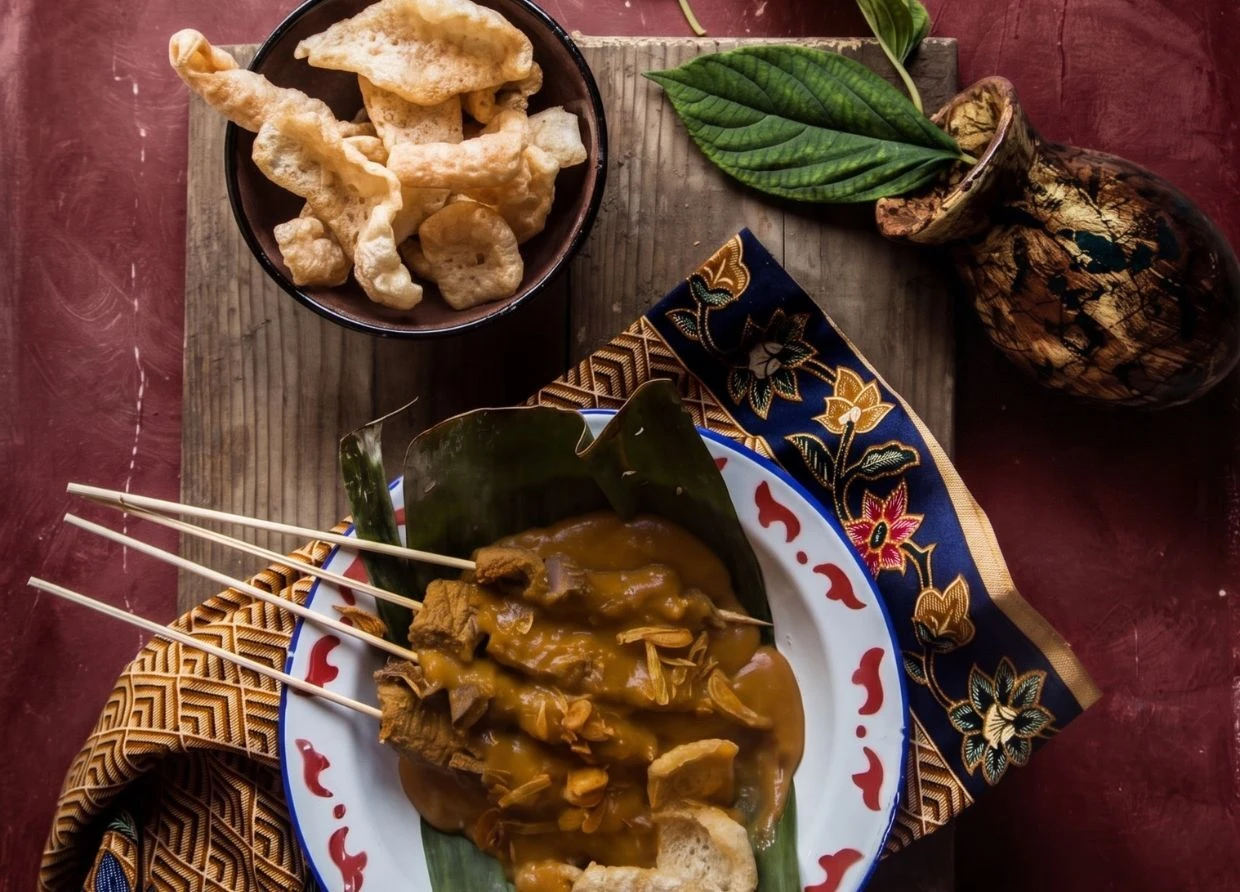
Sate Padang is a beef satay from Padang, West Sumatra, built around skewered beef, beef tongue, or offal that's simmered in spiced broth, grilled over charcoal, and finished with a thick, golden-turmeric gravy. It's typically served on banana leaf with ketupat or lontong (rice cakes) and a scattering of crispy fried shallots. That's the dish TasteAtlas ranked second on its 2026 list of Asia's best meat dishes, tracked through user ratings the platform filters to exclude bots and reflexive local-patriotic votes.
What makes Sate Padang different from other satay ?
Most Indonesian satay leans on peanut sauce or sweet soy glaze. Sate Padang skips both. The meat is boiled in spiced broth until tender, then grilled over charcoal to get a smoky, caramelized crust, and the sauce itself is made by reducing that same broth, thickened with rice flour, and built up with galangal, turmeric, coriander, cumin, lemongrass, and chilies. The result is a sauce closer to a thick curry than a satay glaze savory first, spicy second, aromatic throughout.
There's a textural contrast most people miss on the first bite: the char and slight chew of grilled beef against a sauce so thick it practically coats the skewer, then the crunch of fried shallots cutting through both. It's not a dish that whispers.
How much does Sate Padang cost?
At street stalls in Padang or Jakarta's Padang restaurants, a portion typically runs somewhere in the Rp 20,000–35,000 range, depending on the vendor and portion size closer to Rp 50,000+ at sit-down restaurants in bigger cities. It's built as street food, not fine dining, which is part of why the international ranking lands as a bit of a plot twist.
Which other Indonesian dishes made the list?
Sate Padang wasn't alone. Rendang, nasi gandul, dendeng balado, selat Solo, and semur daging all placed on TasteAtlas's broader Asia meat dishes list a reminder that Indonesia's protein-heavy regional cooking, especially from West Sumatra, keeps punching above its international profile.
Is this the first time Sate Padang has been recognized internationally?
Rendang, another West Sumatran dish, has topped CNN's "World's 50 Best Foods" list in past years, and it appears again in TasteAtlas's 2026 rankings. Sate Padang's #2 finish adds to a pattern: Minangkabau cuisine, from West Sumatra, consistently outperforms in global food rankings relative to its domestic profile in Jakarta-centric media coverage.
The counterintuitive part: Beyti kebab has an origin restaurant, a named chef, and a 1961 birthdate people can cite. Sate Padang has no single inventor on record it developed as street food across generations of vendors. It beat a "designed" dish while being, structurally, undesigned.