NATIONAL WEAVING DAY 2026: WHY SEPTEMBER 7 MATTERS
National Weaving Day falls on September 7 every year in Indonesia. Here's the history behind the date, and why tenun is more than just fabric.
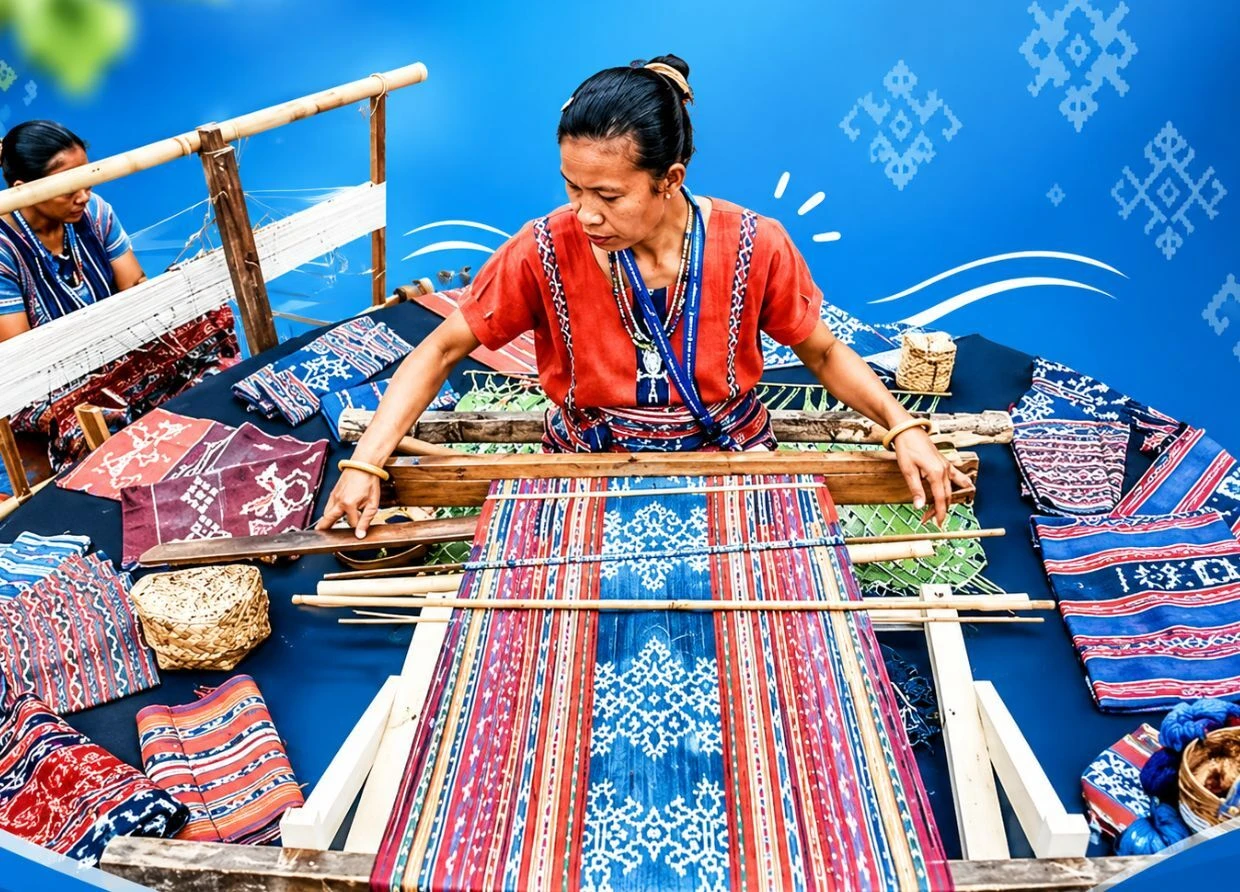




A 480-year-old craft, a 1920s weaving school, and a presidential decree here's why Indonesia stops to honor tenun every September 7.
At a Glance
- September 7 date of National Weaving Day, held annually
- August 16, 2021 the presidential decree that officially established the holiday
- 480+ years old the estimated age of tenun sekomandi, one of the oldest weaving traditions on record
- 1929 the year Indonesia's first dedicated weaving school opened in Surabaya, the reason the date was chosen
View this post on Instagram
A grandmother sits at a wooden loom, a cat curled asleep by her feet, threads of deep red and gold stretching between her hands. That's the image Indonesia's creative economy agency chose to mark National Weaving Day this year and it says more than any press release could.
Every September 7, Indonesia observes Hari Tenun Nasional, National Weaving Day, a holiday recognizing the country's tenun (hand-woven textile) tradition. The date was formally established through a presidential decree on August 16, 2021. It's not just a symbolic gesture. It's a deliberate move to protect a craft that predates the Indonesian nation itself.
Why Was September 7 Chosen?
The date traces back to the founding of Indonesia's first weaving school in Surabaya in 1929, established by Dr. Soetomo, a physician better known as a founder of one of Indonesia's earliest nationalist organizations. Weaving education, in other words, was tied to national identity from the start this wasn't just about textiles, it was about building local capacity in the face of colonial-era trade.
What Makes Tenun More Than "Just Fabric"?
Here's the detail most people miss: some tenun traditions are older than the Dutch colonial presence in Indonesia. Tenun sekomandi, woven by the Kalumpang-Mamuju
communities in West Sulawesi, is considered one of the oldest weaving traditions in the world, with a history spanning more than 480 years. Every motif and thread color in sekomandi carries spiritual meaning this was never decorative fabric. It was ritual, memory, and lineage, woven by hand.
Historically, tenun motifs were tied to birth, marriage, and death ceremonies across the archipelago. Today, the same techniques show up in fashion runways, home interiors, and coin purses sold in weekend markets proof that a centuries-old craft can still adapt without losing its meaning.
"In the past, very few people paid attention to tenun it was seen as something only designers wore," says Adinindyah, founder of Teras Mitra Assoc, a community initiative supporting women weavers.
View this post on Instagram
What's the Biggest Threat to Indonesian Weaving Today?
Regeneration. In parts of South Sulawesi, weaving businesses have shut down entirely because they couldn't compete with mass-produced textiles. Fewer young people are learning the craft, and without new weavers, generations of technique risk disappearing along with the artisans who hold them.
That's why 2026's campaigns from Kemenparekraf's Wonderful Indonesia push to the Ministry of Creative Economy's #NewEngineOfGrowth messaging frame tenun not as nostalgia, but as an economic opportunity. Local governments, including Kapuas Hulu in West Kalimantan, are actively promoting tenun as regional identity and income at once.
For an urban audience that might associate "tradition" with something static, National Weaving Day is a reminder that heritage crafts can be commercially alive if the demand, the training, and the storytelling keep pace.