INDONESIA JUST MADE CODING AND AI A SCHOOL PRIORITY HERE'S WHAT THAT REALLY MEANS
Indonesia makes coding and AI official school subjects by 2027. Here's what it means for students, parents, and the future of work.





AT A GLANCE
- Target Year 2027
- Ministry of Basic and Secondary Education
- Minister Abdul Mu'ti
- Key Focus Coding, AI literacy, deep learning, TKA
Think about the last time a government actually moved fast on education. Hard to remember, right?
That's what makes this announcement stand out. Indonesia's Ministry of Primary and Secondary Education has officially confirmed that coding and artificial intelligence will become national education priorities by 2027. Not a pilot program. Not a trial school in South Jakarta. National.
What exactly was announced ?
Minister Abdul Mu'ti stated that learning to code and understanding AI what the ministry calls "kecerdasan artifisial" will be formally embedded into Indonesia's national education system starting 2027. The goal is straightforward: strengthen students' digital competency so they stay relevant in an economy that is moving faster than most curricula can follow. The announcement came from an official ministry event and was reported by Medcom.id.
It's not just about coding class.
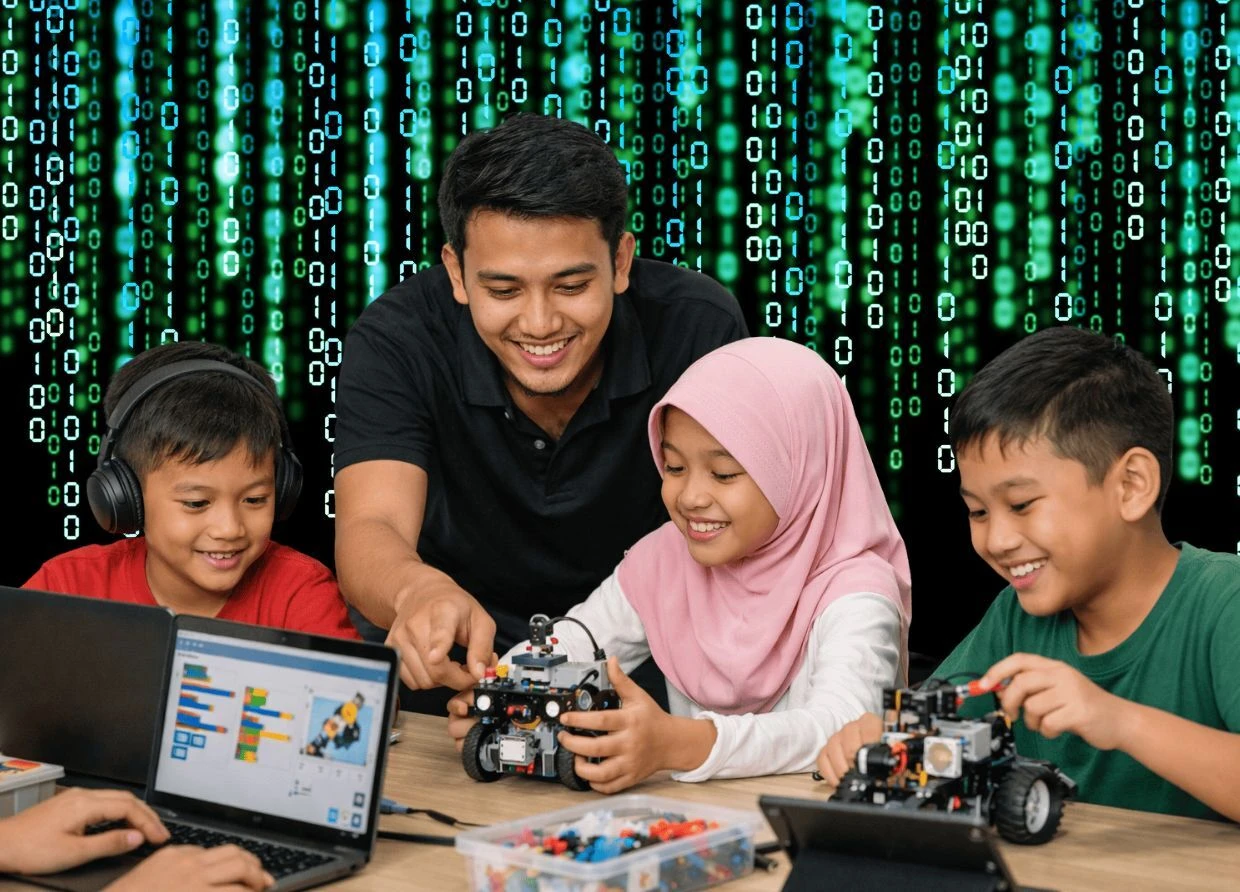
The program goes further than adding a weekly coding slot between math and PE. The government is rolling out a suite of supporting programs: deep learning-focused instruction, talent development tracks, and the Tes Kemampuan Akademik (TKA) a new academic ability test that will likely factor in students' digital skills.
Imagine a classroom where a kid in Surabaya is learning to build a simple chatbot the same week a student in Makassar is studying how algorithms decide what they see on TikTok. That's the ambition here not just coding literacy, but genuine AI awareness at scale.
Why 2027, and why now?
Indonesia has roughly 50 million students across primary and secondary schools. The country also has one of the youngest populations in Southeast Asia, with a median age hovering around 29. That's a massive human resource but only if the skills match where the economy is heading.
The surprising part? Most countries rolling out similar programs are starting with elective modules. Indonesia is making this a priority a structural shift, not a checkbox.
What this means for parents and students today.
If you have a child in school right now, don't wait for 2027 to start. The infrastructure is being built, but the habits and curiosity around technology need to come earlier. Free platforms like Scratch, Code.org, and even YouTube tutorials in Bahasa Indonesia already exist the curriculum will catch up, but the mindset should start at home.
For young professionals watching this space: digital literacy is no longer a differentiator. It's baseline. The generation entering the workforce in 2030 will have been formally trained in AI concepts since middle school.
Indonesia just raised the floor.