SULAWESI CAVE ART IS OLDEST IN THE WORLD
New research confirms Sulawesi cave art is 67,800 years old — the oldest ever found. Here's why Indonesia just changed world history.
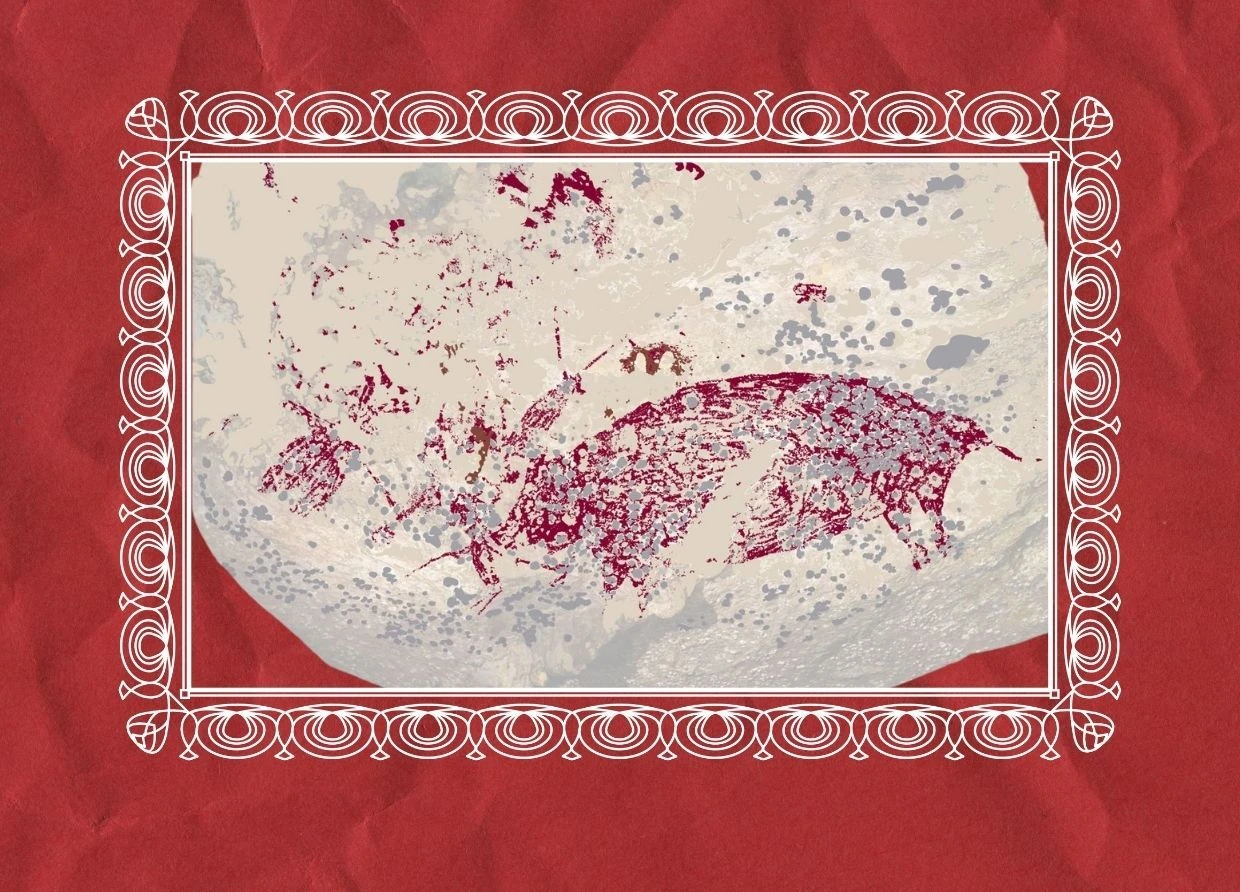





Somewhere in a dark limestone cave on Muna Island, off the coast of Sulawesi, a prehistoric human pressed their hand against a wall and blew pigment around it. That moment — now confirmed to be at least 67,800 years ago — just became the oldest reliably dated example of human-made rock art ever found. This is not a footnote in archaeology. This is Indonesia rewriting the origin story of the human mind.
What is the Sulawesi Cave Art Discovery ?
The hand stencil was found in Liang Metanduno cave on Muna Island, southeastern Sulawesi, Indonesia. Using a precision technique called laser-ablation U-series dating, researchers analyzed calcium deposits overlying the stencil and confirmed its minimum age at 67,800 years. The research was published in Nature in early 2026, led by Griffith University archaeologists Maxime Aubert, Adam Brumm, and Indonesian researcher Adhi Agus Oktaviana from BRIN (Indonesia's National Research and Innovation Agency).
This is not the only headline. Nearby at Leang Karampuang, researchers also confirmed the world's oldest known narrative painting — a hunting scene depicting human-like figures interacting with Sulawesi warty pigs — dating back at least 51,200 years. These are not random marks on a wall. They are stories.
Why Europe Got All the Credit (And Why That Was Wrong)
For generations, textbooks pointed to the painted caves of France and Spain — Lascaux, Altamira — as proof that Homo sapiens became fully creative, fully modern, in Ice Age Europe around 40,000 years ago. Southeast Asia barely got a mention.
That Eurocentric view, researchers now say, stems largely from a lack of advanced dating technology for rock art. Most European cave art was made with charcoal, which is easy to carbon-date. Sulawesi's rock art was made with ochre — an inorganic red-brown pigment from iron oxide — which is far harder to date, meaning its true age was invisible to science for decades.
"A lot of people believed that we became cognitively modern when they arrived in Western Europe," said Maxime Aubert of Griffith University. The Sulawesi findings demolish that assumption.
The Surprising Detail You'll Want to Share
The Muna hand stencil has a distinctive feature: the fingertips are pointed, almost claw-like — an art style found only in Sulawesi. Researchers believe this was deliberate, a way of blurring the boundary between human and animal — something very close to what many Indonesian indigenous traditions still hold sacred today.
An ancient hand with animal fingers, pressed into rock 67,800 years ago. It does not feel entirely distant.
What This Means for Indonesia's Place in History
Archaeologist Maxime Aubert told ScienceAlert: "What we are seeing in Indonesia is probably not a series of isolated surprises, but the gradual revealing of a much deeper and older cultural tradition that has simply been invisible to us until recently."
Indonesia was not a cultural latecomer. It was — at minimum — a co-originator of symbolic human thought. The caves of Sulawesi hold evidence of storytelling, ritual, imagination, and shared meaning that predates anything Europe has to offer by tens of thousands of years.
The history of art did not begin in Europe. It may well have begun here.