INDONESIA JUST CREATED A PASSPORT FOR MUSEUM LOVERS
Indonesia's Ministry of Culture launches Museum Passport on June 16, 2026 — a stamp-book letting visitors collect unique marks from 18 museums and 34 heritage sites.





You've already got a passport for crossing borders. Starting June 16, 2026, you can get one for crossing centuries.
Indonesia's Ministry of Culture, through its Museum and Cultural Heritage (MCB) unit, has launched the Museum Passport — a physical stamp-book that lets visitors collect unique ink impressions from museums and heritage sites across the country. Think of it like the passport you take to Paris, except the stamps come from Borobudur, Museum Nasional, and 50+ other cultural landmarks instead of immigration counters.
What Exactly Is the Museum Passport ?
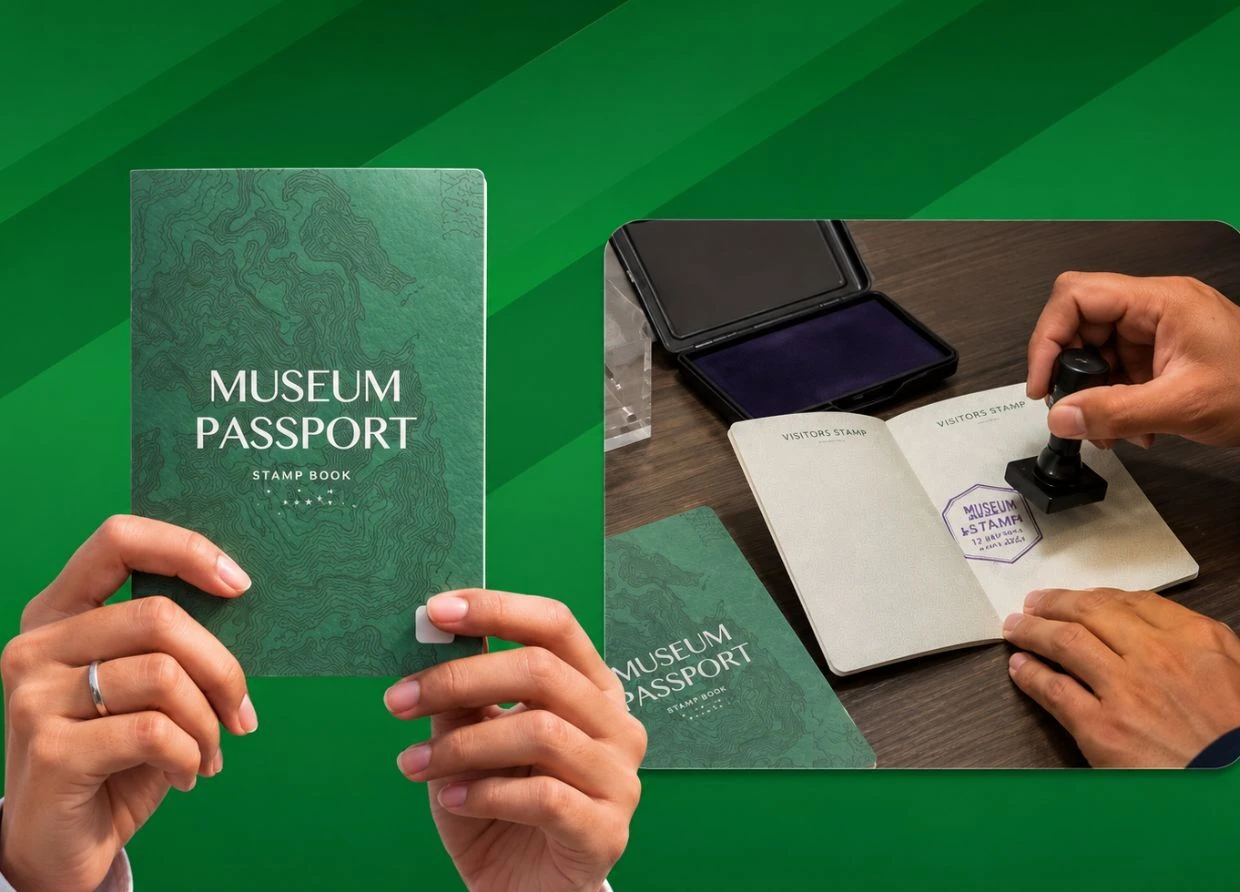
The Museum Passport is a physical booklet — designed to resemble an actual travel passport — issued officially by Museum dan Cagar Budaya (MCB), the cultural heritage unit under the Ministry of Culture (Kementerian Kebudayaan). Each page contains blank fields to be filled with custom ink stamps from different museums and heritage sites. The booklet also includes a map of participating locations.
It was first unveiled at Museum Nasional Indonesia in Central Jakarta on May 18, 2026, during the International Museum Day celebration themed "Museums Uniting a Divided World." The official launch for the public is set for June 16, 2026 — the anniversary of the MCB itself. Visitors can purchase the passport at IHA Shop outlets inside MCB-managed museums, with wider distribution through bookstores currently being explored in partnership with Paperina.
Why Go Analog When Everything Is Digital?
That's exactly the point. MCB Head Indira Estiyanti Nurjadin cited a deliberate counter-current to the digital era: the program taps into a growing Gen Z and Gen Alpha appetite for tactile, analog objects — journaling, vinyl records, physical photo prints. A stamped page carries weight that a screenshot doesn't.
"This is part of our spirit for cultural heritage. Preservation isn't just for the government or curators — it involves academics and the broader community. When the public is involved, that's where a sense of ownership naturally grows."
— Indira Estiyanti Nurjadin, Head of Museum dan Cagar Budaya (MCB)
The surprisingly counterintuitive detail: each museum's stamp is designed to be visually distinct and aesthetic enough to be photographed for Instagram. MCB is essentially building a physical collectible system in an age when everyone is burning out on screens.
What Does It Actually Feel Like to Use?
Imagine the faint thud of a rubber stamp pressing into slightly textured cream-coloured paper, the ink sharp and ceremonial against the page. Each mark is proof you stood in a place where history is kept. It's a small ritual in a world that has replaced rituals with notifications.
The program currently covers 18 museums and 34 cagar budaya (heritage sites) under MCB's management, spread across Indonesian cities from the kabupaten level to provincial capitals. Private museums are also being invited to join.
Who Is It For?
Officially, everyone. Strategically, it's aimed squarely at millennials and Gen Z — the same generation that turned journaling into a TikTok trend and made hand-drawn maps fashionable again. Culture Minister Fadli Zon put it plainly at the May 18 launch: going to a museum should feel as natural as going to a mall. The Museum Passport is the nudge to make that happen.
For urban professionals aged 25–40, it reframes a weekend at the museum from obligation to game — a treasure hunt version of Indonesian history, where the prize is a page filled with ink.