INDONESIAN PORRIDGE: 6 BOWLS, 6 REGIONS, 6 DIFFERENT STORIES
Indonesian porridge is not one dish. Explore six regional bowls, from Aceh’s spicy kanji rumbi to Jakarta’s cold bubur ase, for World Porridge Day.




At a glance
- 6 regional porridges featured, from Aceh to West Sumatra
- 1 debate that never ends: stirred or not stirred
- 10 October: World Porridge Day
Ask ten Indonesians how they eat their bubur ayam, and you will get a fight. Some stir everything into a beige mush. Others keep the chicken, peanuts and crackers neatly apart. That one bowl shows how seriously people take Indonesian porridge, and it is only the start.
What Is Indonesian Porridge?
Indonesian porridge (bubur) is rice cooked slowly until soft, then topped or served in a broth that changes by region. It is eaten across Indonesia, from Aceh to Bali, as breakfast, comfort food or dessert. Every year around World Porridge Day on 10 October, Indonesia’s creative economy agency, Ekraf, highlights the variety. Prices depend on the city and the stall, so check locally; many street bowls cost roughly Rp15,000–25,000.
Why Is Bubur Ayam Called the Nation’s Breakfast?
Bubur ayam is rice cooked until very soft, then covered in a golden chicken broth. Toppings include shredded chicken, cakwe (fried dough), peanuts and crackers. Ekraf calls it Indonesia’s number one comfort food.
“Are you in the stirred camp or the not-stirred camp?” Ekraf, in its World Porridge Day post
Whichever side you pick, you will probably defend it at the next breakfast.
View this post on Instagram
Which Indonesian Porridge Has the Most Colour?
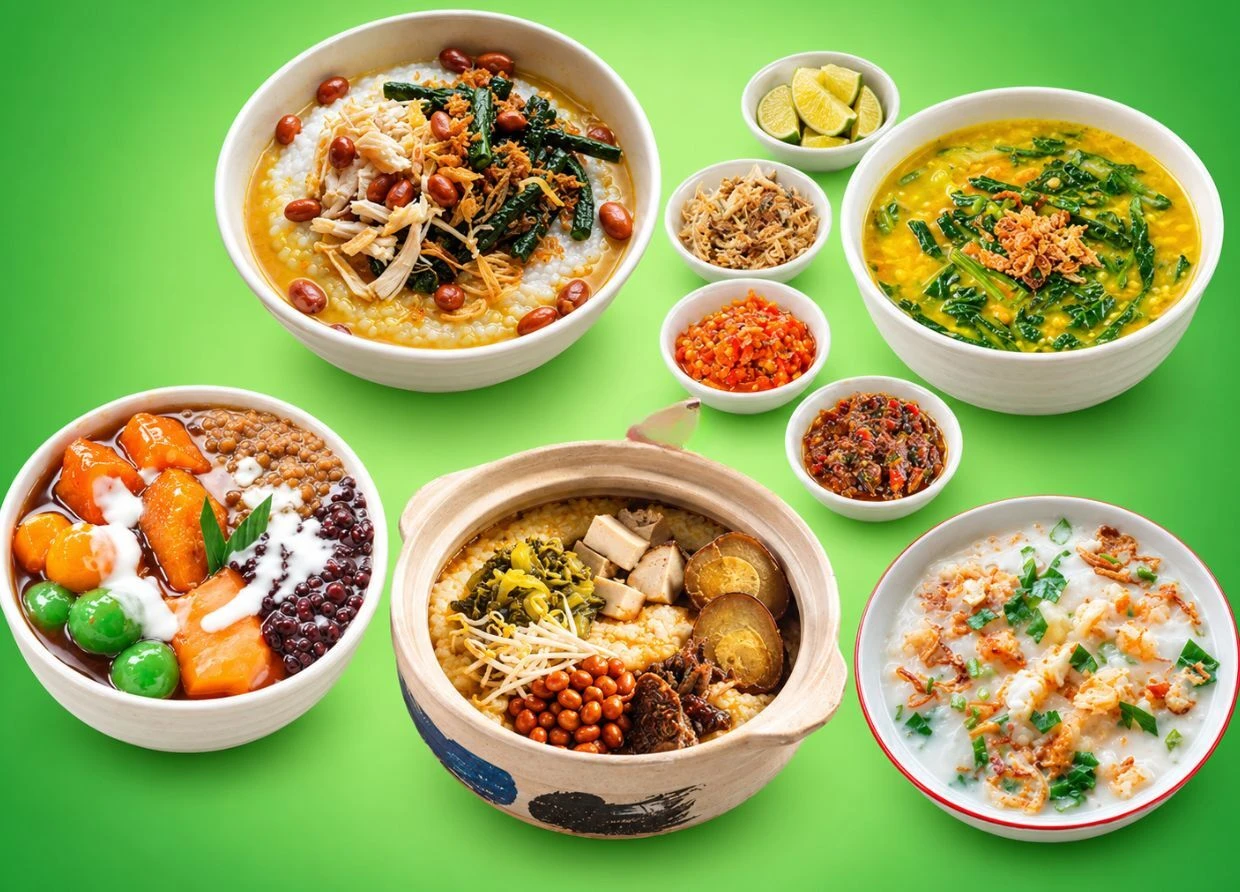
That would be tinutuan, from Manado in North Sulawesi. Its bright orange comes from yellow pumpkin, cassava, sweet corn and green leafy vegetables, all cooked into the rice. Locals eat it with salted fish and sambal roa, a chilli paste that adds smoky heat. It is a vegetable-heavy bowl, so it is far from boring.
In Aceh, the bowl is kanji rumbi. It is closer to a thick, spiced soup, cooked with shrimp and meat. The smell of the spices fills the room, which is why it is a favourite during Ramadan.
Is Indonesian Porridge Always Hot and Savoury?
No, and this is the fact worth sharing. Bubur ase from Jakarta is served cold. Betawi cooks pour a beef semur broth over the rice, then add fresh asinan vegetables and crunchy noodle crackers. You get sweet-savoury sauce, cool crunch and soft rice in one spoon.
Bali has bubur mengguh, from Buleleng. The rice is covered in a spiced chicken-and-coconut-milk broth and topped with seasoned chicken and fresh urap vegetables.
Then there is the sweet side. Bubur kampiun, from Minangkabau in West Sumatra, packs several desserts into one bowl: bubur sumsum, black glutinous rice, banana kolak, candil and lupis. It is finished with coconut milk and liquid palm sugar, so it tastes sticky, sweet and a little smoky.
What Does This Say About Indonesian Food?
Ekraf sums it up with one line: every region has its own comfort behind the bowl. The base is the same, but the broth, spice and toppings change with local ingredients and habits. A single grain of rice carries Aceh’s spices, Manado’s vegetables, Bali’s coconut and Padang’s palm sugar.
So next time you order bubur, ask where it comes from. You might learn something before the first bite.