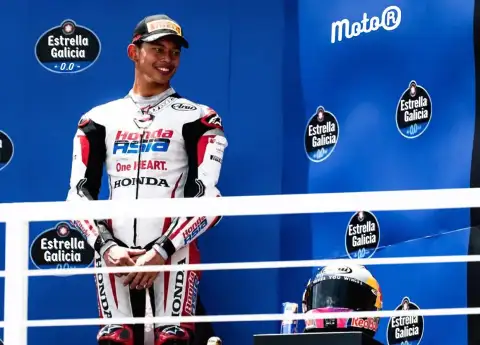
THE WORLD CUP 2026 FINAL BALL WAS MADE IN INDONESIA
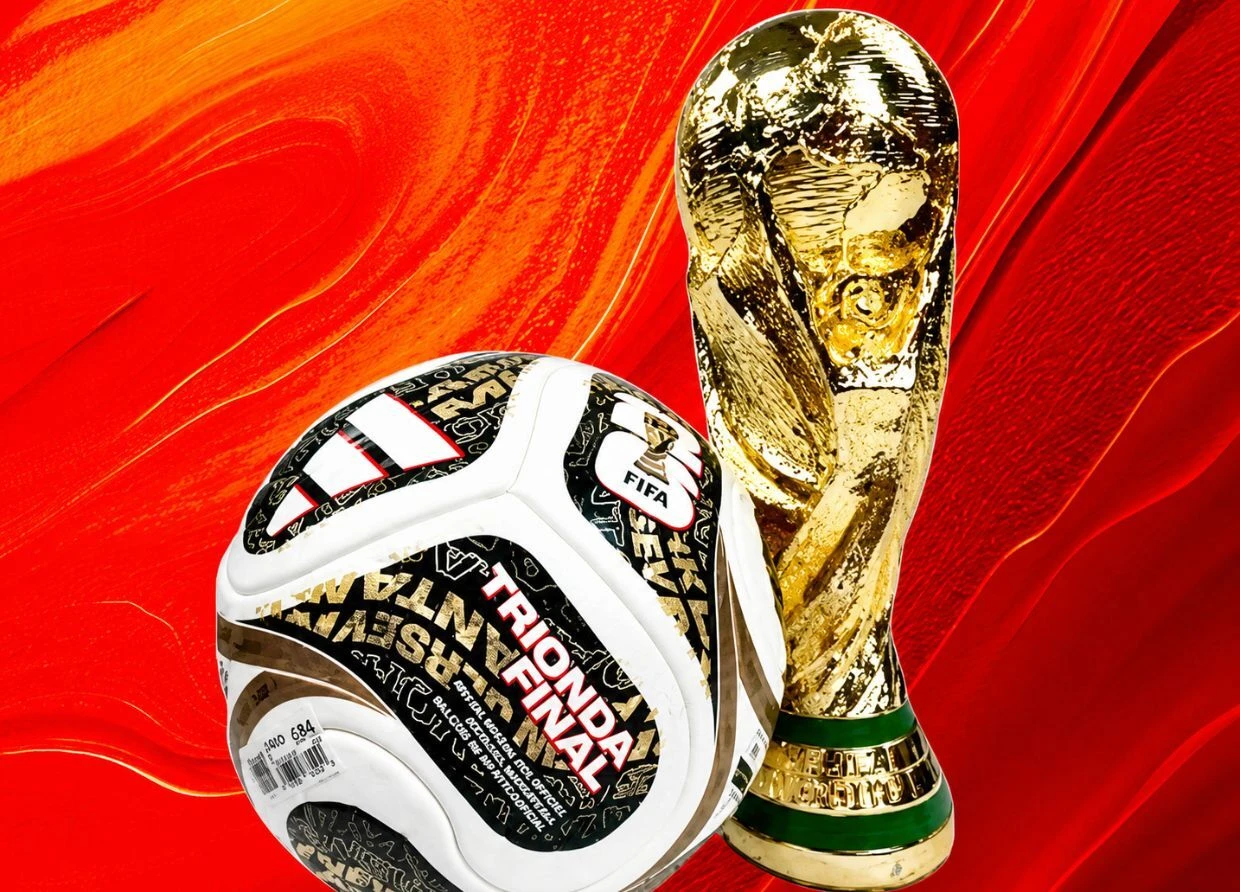
The Adidas Trionda Final, the gold-trimmed ball for the World Cup 2026 final on July 19, was reportedly made in Madiun, Indonesia its 7th World Cup ball since 1998.


Indonesia's national team won't be at the 2026 World Cup. The ball will.
That's the contradiction fueling a clip that's racked up 41,000 likes on Instagram this week: a gold-and-black ball spinning slowly on a display turntable, the words "TRIONDA FINAL" stamped across its panels in foil lettering. The account behind it, timnasional.news, framed it as a backhanded kind of pride Timnas Indonesia lost their World Cup qualifying bid to Saudi Arabia and Iraq in the fourth round, but the ball both finalists will fight over reportedly still has "Made in Indonesia" stitched into its seams.
The Adidas Trionda is the official match ball of the 2026 FIFA World Cup, unveiled October 2, 2025, at Brooklyn Bridge Park in New York. A special gold, white, black, and red version called the Trionda Final is expected to be used from the semifinals through the final, which kicks off July 19, 2026, at MetLife Stadium in East Rutherford, New Jersey. Multiple Indonesian outlets, including RRI and Bisnis.com, report the Final edition was produced in an industrial zone in Madiun, East Java the same region that built the Al Rihla ball for Qatar 2022.
At a Glance
- $170 retail price of the standard Trionda match ball
- 500Hz refresh rate of the motion sensor chip stitched inside the ball
- 7th number of World Cup balls with Indonesian manufacturing roots since 1998
- July 19, 2026 final match date, MetLife Stadium, New Jersey
What Is the Adidas Trionda Final Match Ball ?
The regular Trionda uses a four-panel build a departure from the traditional paneling Adidas has used since the 1970 Telstar designed around a "tri-onda" (three-wave) motif representing host nations USA, Mexico, and Canada. Inside it sits Adidas's Connected Ball Technology: a side-mounted chip sampling motion data 500 times per second, feeding VAR systems for faster offside and handball calls.
The Final version keeps that tech but swaps the tri-color scheme for gold detailing that nods to the World Cup trophy itself. Football collector Christopher Carrera first leaked official images in mid-June, and small print on the panels "Made in Indonesia," "Fabrique en Indonésie" is what set off the current wave of posts.
Why Does an Indonesian Factory Keep Building World Cup History?
This isn't a one-off. Indonesian factories produced the Tricolore (1998, Majalengka), Fevernova (2002), Teamgeist (2006), Jabulani (2010), Brazuca (2014, via Sinjaraga Santika Sport), and Al Rihla (2022, Madiun). Decades of FIFA-grade stitching work, much of it concentrated in West and East Java, built a reputation for precision panel-bonding that Adidas has returned to again and again even as Indonesia's own team has yet to play in a World Cup since independence.
"We can track every event, every interaction the player has with the ball," said Hannes Schaefke, Adidas's Football Innovation Lead, describing the sensor system now built into every Trionda.
How Much Does the Trionda Cost, and Where Can You See One?
The standard Trionda Pro retails for $170 through Adidas and licensed retailers. The Final edition isn't sold publicly yet leaked units are limited to collectors and pre-release samples, with a likely retail drop timed to the semifinals in mid-July.
For Indonesian football fans, the appeal isn't really about owning the ball. It's the same low-key flex as spotting a "Made In" tag on a luxury bag: proof that the hands behind a global spectacle were, once again, local ones even when the scoreboard tells a different story.