SOLO BEATS JAKARTA. BRIN JUST MADE IT OFFICIAL.
Solo topped Indonesia's 2025 Regional Competitiveness Index — and the reasons say a lot about where the country is actually heading.



What is the BRIN IDSD 2025 ranking ?
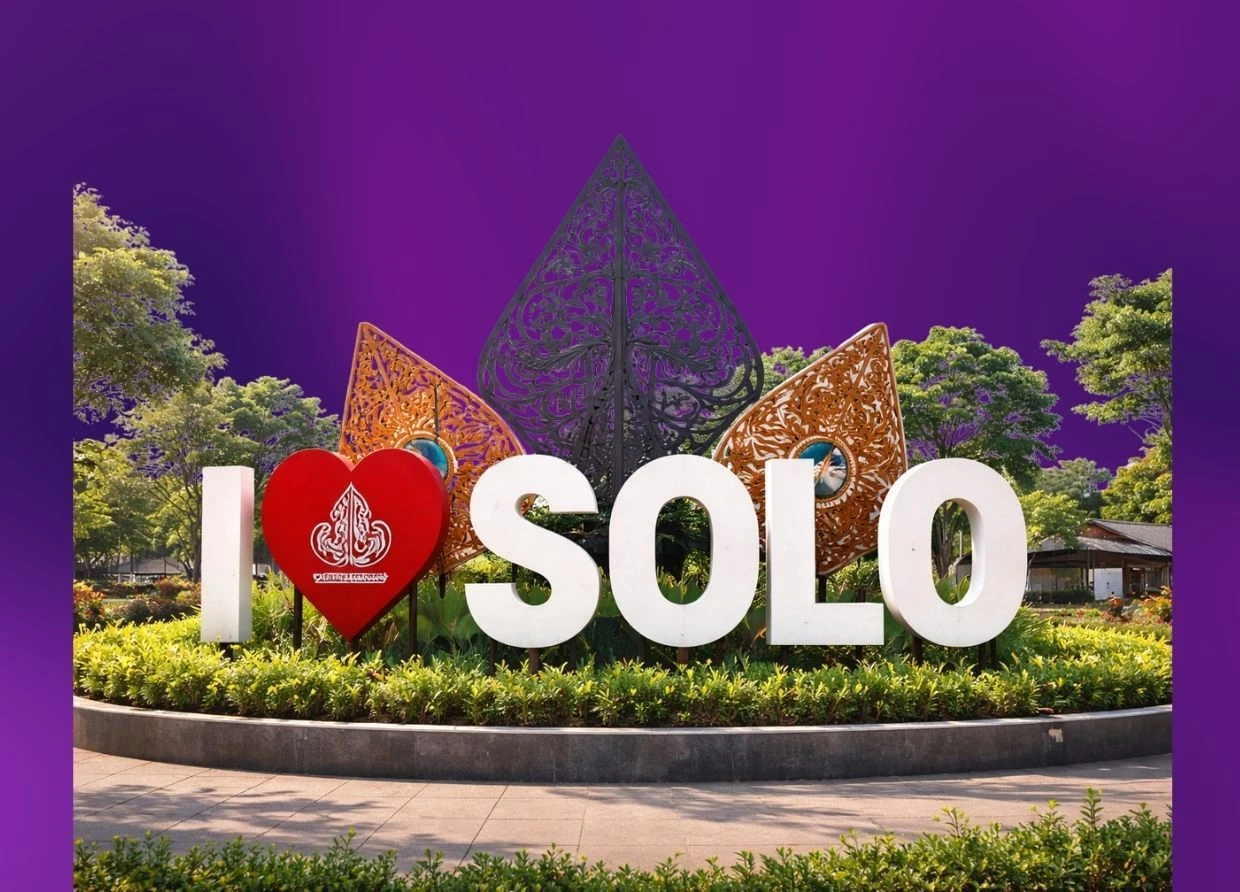
The Indeks Daya Saing Daerah (IDSD) 2025, released by Badan Riset dan Inovasi Nasional (BRIN), is Indonesia's official regional competitiveness index. It ranks cities across 12 pillars — from institutional quality and infrastructure to technology adoption, economic stability, and local innovation capacity. Surakarta, also known as Solo, came in first with a score of 4.43 out of 5.
The index was designed not just to measure economic size, but to capture how well a city's entire ecosystem supports investment, productivity, and long-term growth. Think of it as a city's health check — not just its bank balance.
Why did Solo rank number one?
Solo doesn't have skyscrapers or a major international port. What it has is consistency. The city has invested steadily in local governance reform, digital infrastructure, and small-business support systems for over a decade. That groundwork shows up in the IDSD's institutional and innovation scores.
Walk through Pasar Gede on a Saturday morning — the smell of jamu vendors mixing roots and herbs, the hum of batik merchants taking WhatsApp orders — and you feel an economy that has modernized without abandoning its core. That cultural-commercial hybrid is exactly what BRIN's index rewards.
Here's the counterintuitive fact: Surakarta's population of around 520,000 is smaller than a single Jakarta district. Yet it outscored every megacity in the country. Scale, it turns out, is not the same as strength.
What about Yogyakarta and Semarang?
Yogyakarta followed at 4.42 — just 0.01 behind Solo — powered by its university ecosystem (Universitas Gadjah Mada alone enrolls over 55,000 students) and strong creative-economy sector. Semarang rounded out the top three at 4.37, buoyed by its port logistics improvements and smart-city programs under recent city administrations.
The top three being Central Java cities is not a coincidence. The region has benefited from coordinated provincial infrastructure investment and a culture of incremental, unglamorous governance reform that rarely makes headlines but clearly moves the needle.
Which other cities made the BRIN top 10?
Banjarmasin, Bandung, Medan, and Mataram also appeared in the top 10, bringing geographic diversity to a list initially dominated by Java. Their presence signals that competitiveness is spreading — slowly — beyond the island that holds 57% of Indonesia's population.
Why does this matter for young Indonesians?
If you're a millennial or Gen Z professional deciding where to build a career or start a business, this index is worth reading carefully. High IDSD scores correlate with better ease of doing business, stronger local startup ecosystems, and more responsive local government. Solo and Yogyakarta are also significantly cheaper to live in than Jakarta — which means your startup runway goes further.
The talent drain from second-tier cities to Jakarta has been a defining trend for two decades. Rankings like this suggest the gap is narrowing.