FOREIGNERS SAY BAHASA INDONESIA IS EASY. MOST INDONESIANS DISAGREE. HERE'S WHY THEY'RE BOTH RIGHT.
Foreigners rank Bahasa Indonesia among the easiest languages to learn. Here's why locals still find it hard and what's changing in 2026.





Ask a foreign exchange student in Yogyakarta how hard Bahasa Indonesia is, and they'll probably shrug. Ask an Indonesian high schooler the same question about their Ujian Bahasa Indonesia, and you'll get a groan. That contradiction is the whole story.
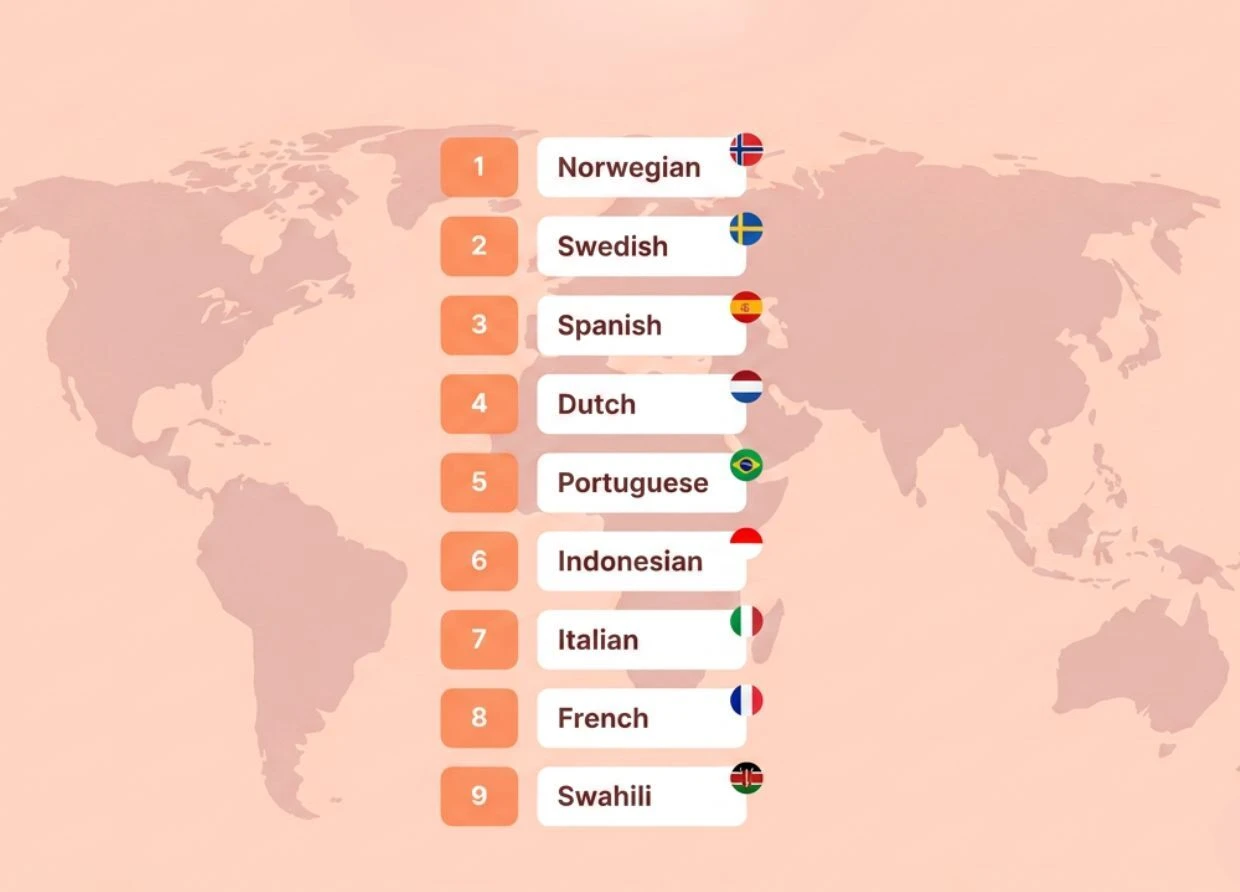
Is Bahasa Indonesia easy to learn? For English speakers, the U.S. Foreign Service Institute (FSI) the body that trains American diplomats places Indonesian in its Category III tier, requiring roughly 900 to 1,000 classroom hours to reach professional working proficiency. That puts it in the same bracket as Malay and Swahili, and notably faster to learn than languages like Russian or Hindi. The reasons are structural: no verb conjugation, no noun gender, no grammatical tenses, and a Latin alphabet that's already familiar to most global learners.
At a glance:
- FSI Category III around 900–1,012 classroom hours to fluency
- Zero verb tenses and zero grammatical gender
- Officially recognized as a UNESCO General Conference language since 2023
- Taught in schools and universities in countries including Australia and Egypt
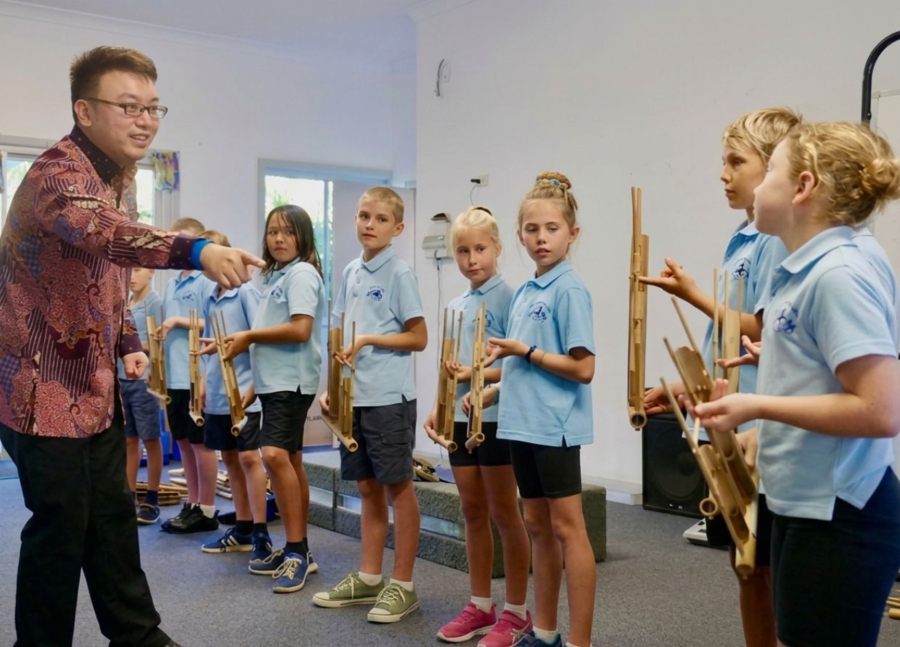
Credit : Indonesian language teacher in Australia (KalderaNews/Courtesy)
Why do foreigners find it easier than locals do?
The paradox comes down to what "learning a language" actually means. A foreign learner is usually chasing conversational fluency enough to order food, ask directions, joke with a driver. Indonesia's own Badan Bahasa (Language Development and Cultivation Agency) points to a different problem entirely for native speakers: confusion between kata baku (standard/formal words) and everyday informal ones, shaky grip on formal sentence structure, and shifting spelling rules that get revised over the decades.
In other words, foreigners are learning to speak. Indonesians are being tested on how to write it correctly and that's a much narrower, stricter target.
What actually trips up foreign learners, if not grammar?
Two things, consistently: the imbuhan system and slang. Bahasa Indonesia relies heavily on prefixes and suffixes me-, ber-, -kan that quietly change a root word's entire meaning. Get the affix wrong and "to hit" can slide into "to be hit" without you noticing. Layer on top of that the gap between textbook Indonesian and the bahasa gaul people actually text each other, and a learner who aced their course can still feel lost on the street.
Why does this matter beyond language class?
Because Bahasa Indonesia's global footprint is quietly expanding. Since 2023, it has held official status as a language of the UNESCO General Conference, and it made its formal debut speaking in that forum at the 43rd session in 2025. Universities and schools from Australia to Egypt now teach it as a foreign language not as a courtesy, but because there's real demand.
For a country of over 270 million people whose national language was standardized less than a century ago, that's a fast climb from local lingua franca to something taught in Cairo lecture halls.