WHY AYAM GEPUK CONQUERED THE MALAYSIAN FOOD SCENE
A West Java smashed chicken dish arrived in Malaysia with one outlet in 2017. Today it's a halal-certified, TikTok-fuelled national obsession.
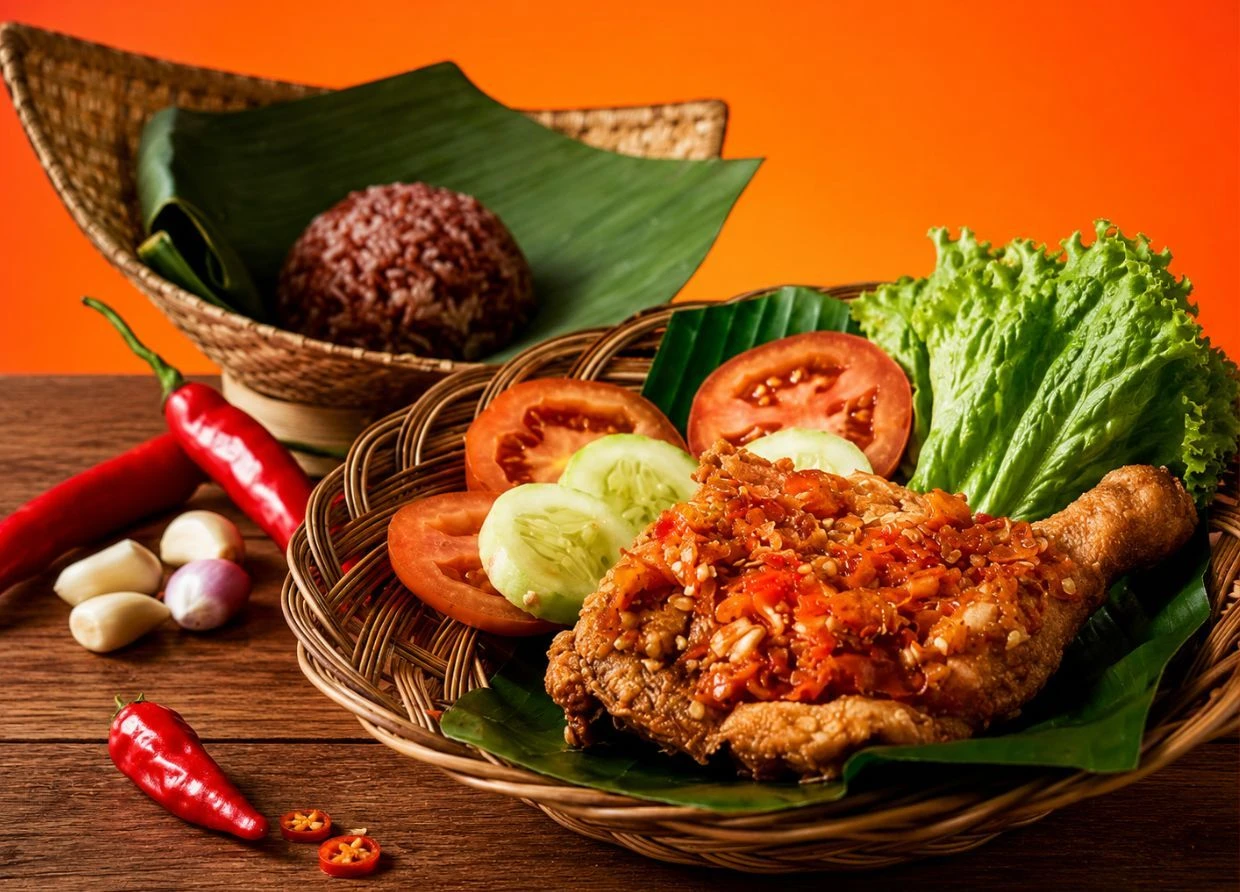





The first thing you notice is the sound. That sharp, satisfying crack as the freshly fried chicken gets pressed flat — smashed hard until the crispy skin shatters and the meat opens up, soaking in every drop of the fiery sambal poured on top. That's Ayam Gepuk. And for Malaysians, it hit differently.
What is Ayam Gepuk ?
Ayam Gepuk — which literally translates to "smashed chicken" — is a traditional dish from West Java, Indonesia. It starts as a marinated, fried chicken leg or thigh that is then physically crushed (gepuk) with a heavy mallet. The smashing breaks down the muscle fibres, making the meat tender, juicy, and porous enough to absorb a generous ladling of freshly ground sambal. The result is shatteringly crisp on the outside, moist on the inside, and coated in bold, spicy heat. It's typically served with steamed rice, raw vegetables, and lime. Ayam Gepuk Pak Gembus brought this dish to Malaysia in August 2017, opening its first halal-certified outlet in Batu 5, Gombak — and nothing has been the same since.
How did it go from one outlet to a nationwide craze?
The dish arrived quietly but spread loudly. Food bloggers discovered it first, drawn in by the theatrical "smashing" process that begged to be filmed. TikTok did the rest. Mukbang videos, slow-motion sambal pours, and close-up shots of that crispy, lacquered skin racked up millions of views and sent Malaysians straight to the nearest outlet to try it for themselves.
"Viral videos showcasing the crispy texture, the dramatic pouring of sambal, and the sheer volume of food generate immense curiosity," the @seasia.stats report noted, describing how the creator economy turned a regional Indonesian recipe into a digital marketing machine.
Beyond the screen, Ayam Gepuk found a second home at Ramadan bazaars across the country — a setting where bold flavors, generous portions, and queue-worthy food stalls are practically a cultural institution. Its halal certification removed every barrier for Muslim consumers, and its affordability — with meals starting at RM8.99 — meant it was accessible to everyone from students to working adults.
What makes Ayam Gepuk different from regular fried chicken?
The difference is in the technique, not just the recipe. Ordinary fried chicken stays closed — the crust forms a sealed shell. Ayam Gepuk breaks that seal. The smashing step cracks the surface and opens the fibers, letting the sambal penetrate deep into the meat rather than just sitting on top. What you get is a dish where every bite carries both the crunch and the heat simultaneously.
Here's the counterintuitive part: the "damage" to the chicken is exactly what makes it better. The imperfect, jagged surface after smashing creates more surface area for the sambal to cling to. Destruction, in this case, is the technique.
Why did Malaysia specifically embrace it so fast?
Malaysia has always had a cultural openness to Indonesian flavors — both countries share Malay culinary roots, halal food culture, and a deep love of sambal. Ayam Gepuk wasn't completely foreign; it felt like a familiar cousin arriving with something new to show.
Its success is also a story about timing. The dish entered the Malaysian market just as TikTok food content was exploding, just as creator-led restaurant discovery was replacing food critics, and just as Ramadan bazaar culture was being documented and shared online at scale.
The brand behind it — Ayam Gepuk Pak Gembus — built on this with a scalable franchise model. Simple recipe, strong branding, low operational risk. Other vendors followed, and Ayam Gepuk went from one outlet in Gombak to a phenomenon that now shows up everywhere from food courts to drive-through windows.