INDONESIA'S MANGOSTEEN: THE TROPICAL QUEEN THE WORLD IS HUNTING FOR
Indonesia's mangosteen exports hit 6,300 tons/month. Discover why this tropical Queen of Fruits is taking over global markets and what's holding it back.
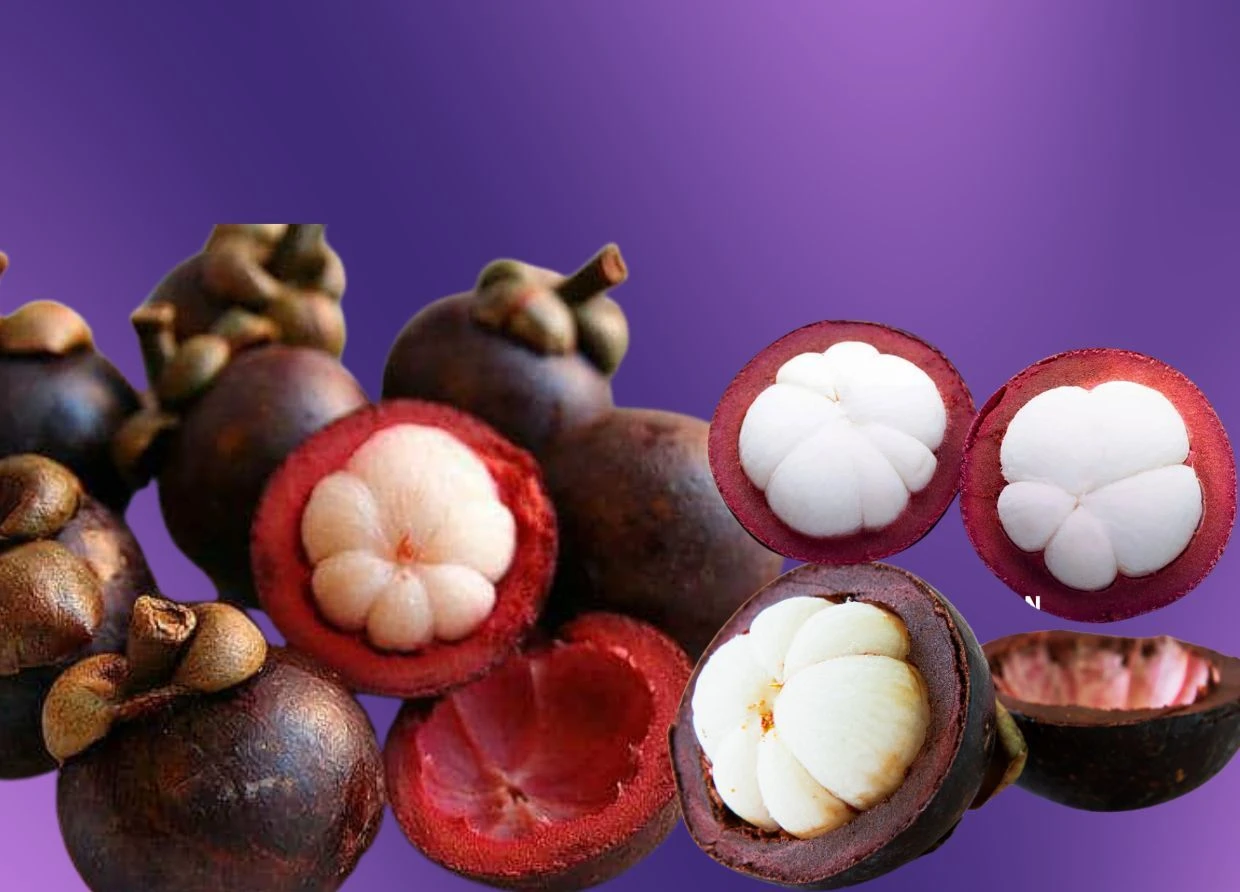



Indonesia's mangosteen (Garcinia mangostana) is now one of the country's top fruit exports by volume, shipped from Sumatra and West Java to China, Malaysia, the UAE, Hong Kong, and France. It's a tropical fruit that punches well above its weight, both nutritionally and commercially.
The important point:
- The fruit is world-class. The market is there (China, France, UAE, Hong Kong).
- But 85% of the harvest fails quality checks before it even ships.
- China already banned Indonesian mangosteen for nearly 5 years (2014–2018) over quality issues.
- No amount of branding or marketing fixes a quality problem only better farming does.
What exactly is mangosteen and why is it called the Queen of Fruits?
Mangosteen is a small tropical fruit native to Southeast Asia, with deep purple-red skin, a green crown at the top, and snow-white flesh inside. The flesh breaks into soft, juicy segments with a flavour that sits somewhere between strawberry, peach, and lychee bright, floral, and mildly tart. It grows in regions with high rainfall and humidity, like West Java and South Sumatra, and peaks in season between November and February. The fruit typically retails at around Rp 15,000–30,000 per kilogram in local markets.
The "Queen" title comes from this unique combination of taste, nutrition, and rarity. Fresh mangosteen is notoriously difficult to transport it bruises easily and loses quality fast which made it a prized luxury in European courts during the colonial era.
What health benefits does mangosteen skin actually have?
Here's the surprising part: the bit most people throw away may be the most powerful. The dark purple rind is packed with xanthones a class of antioxidants belonging to the polyphenol family which the fruit's pulp doesn't contain in the same concentration.
"Antioxidants capture free radicals that have already formed and neutralise them, so they don't trigger a chain reaction that continuously damages cells."
— Dr. Faisal Baraas, Cardiologist, published in Jurnal Kardiologi Indonesia
Specifically, mangosteen rind contains α-mangostin and γ-mangostin, two xanthone variants studied for their ability to lower oxidative stress markers (MDA) while boosting the body's natural antioxidant enzyme superoxide dismutase (SOD). Research published in Jurnal Kardiologi Indonesia found potential links to anti-inflammatory, anti-diabetic, and anti-cancer activity particularly against liver, lung, and stomach cancer cells via a compound called garcinone E.
The flesh, meanwhile, delivers vitamin C and dietary fibre supporting immune function, blood sugar control, skin health, digestion, and weight management.
Why does only 15% of Indonesia's mangosteen make it to export markets?
The biggest challenge is a defect called getah kuning yellow latex that seeps into the flesh when the fruit is damaged. It makes the flesh bitter and discolours it, failing quality checks instantly. In 2014, China rejected Indonesia's mangosteen shipments entirely over chemical residue levels exceeding their safety threshold. Exports were blocked for nearly five years, with limited re-entry in 2016 and a complete halt again in 2017. The ban was only lifted in 2018 after Indonesia reformed its farming standards and export inspection protocols.
According to data from the Agricultural Quarantine Agency (Badan Karantina Pertanian), by July 2023 Indonesia was exporting around 6,300 tons of mangosteen per month making it one of the country's highest-volume fruit exports. Intensive cultivation, better post-harvest handling, and stricter grading are slowly pushing that 15% export pass rate higher.
How does mangosteen fit into Indonesia's agricultural export strategy?
Mangosteen sits alongside banana, pineapple, and dragon fruit as a key commodity in Indonesia's horticultural export push. The global market for exotic tropical fruits is growing, driven by health-conscious consumers in East Asia and Europe who are actively seeking functional foods with antioxidant properties. For a fruit that grows naturally in Indonesia's volcanic soil and rainforest climate, the long-term potential is significant if the quality chain can be fixed end-to-end.
The Queen of Fruits has always been hard to catch. Indonesia is finally getting better at it.