SAKA MUSEUM'S KAMASAN EXHIBITION REWRITES 500 YEARS
SAKA Museum's Kamasan exhibition traces 500 years of Balinese painting, from 16th-century royal court works to today's artists. Runs until May 2027.



At a Glance
- 30+ artworks from 19th-century ritual cloths to pieces made in the last 5 years
- Runs 28 August 2026 – 30 May 2027 (until 30 May 2027)
- Daily, 10:00–18:00 at SAKA Museum, AYANA Bali, Jimbaran
- 1,004 years old: the oldest evidence of Balinese painting predates Kamasan by centuries
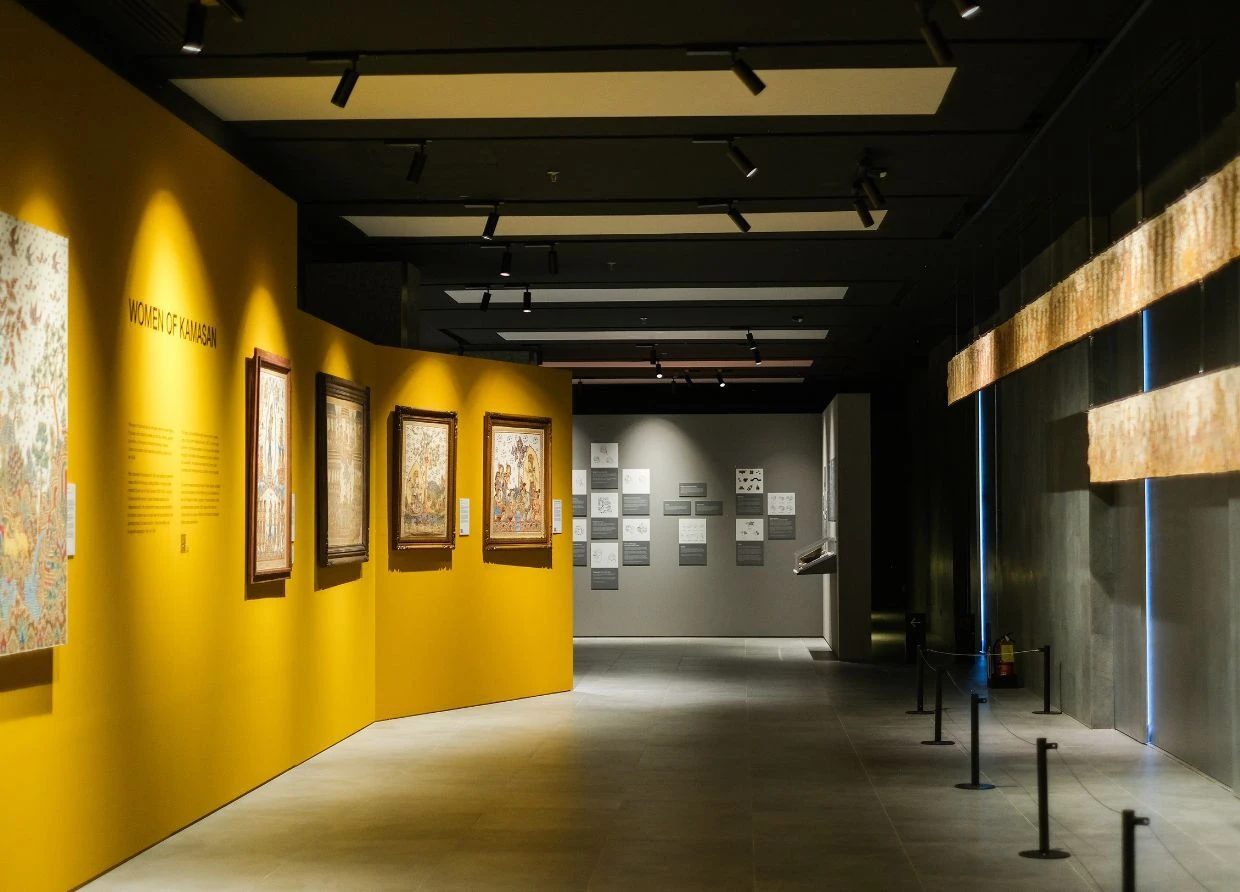
A wall the color of dried blood. Elongated eyes staring back at you from cloth painted before your great-grandparents were born. This is the first thing you see walking into KAMASAN: The Noble Tradition of Balinese Painting, the debut temporary exhibition at SAKA Museum, AYANA Bali.
The show opened 28 August 2026 and runs through 30 May 2027 in a new gallery SAKA Museum has built specifically for Bali's living culture meaning a different theme every year, not a permanent set of dusty vitrines. Tickets are sold through ticket.sakamuseum.org, and the museum is open daily from 10 a.m. to 6 p.m.
Kamasan painting takes its name from a village in Klungkung Regency, eastern Bali, where the style flourished under the 16th-century Gelgel court and later matured inside the Klungkung palaces. It draws its figures gods, demons, kings from the Ramayana and Mahabharata, rendered in a codified visual language shared with wayang kulit shadow puppetry: elongated limbs, almond eyes, a flatness that reads more like scripture than portraiture.
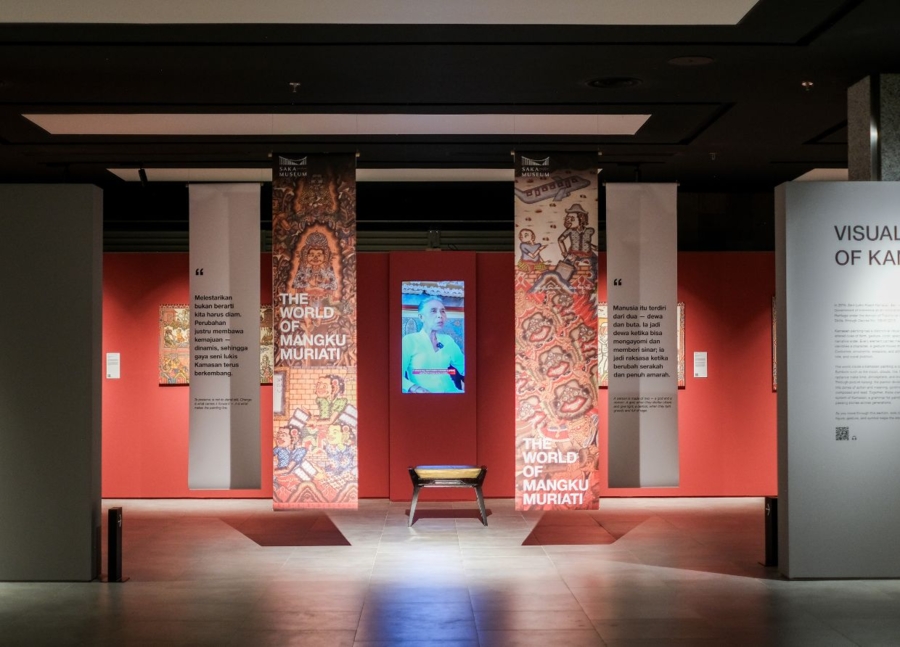
Credit : Communication Representation Scop3
Why Is This Kamasan Exhibition Different From Every Other One?
Most previous shows treating Kamasan style museum pieces have kept the old masters and the new generation in separate rooms, almost separate conversations. SAKA Museum's exhibition, curated by Farah Wardani and Made Chandra and designed by architectural studio studiodikubu, refuses that split.
Historical ritual cloths sit in the same sightline as work by Eka Sutha, whose pop-collage style pulls Balinese mythology into contemporary urban Bali, and Eka Mardys, a tattoo artist who redraws Kamasan figures with a futuristic edge. The exhibition is structured as a sequence of Kala temporal chapters walking visitors from Kamasan's ritual origins through its hereditary master painters to the artists working right now.
The closing chapter belongs to Mangku Muriati, believed to be the first woman of her generation to hold the dual role of temple priest and Kamasan artist. Her work has shown at the 2025 Sharjah Biennial and is held in the collections of the Australian Museum in Sydney and the Ibsen Museum in Oslo proof the tradition travels far beyond Klungkung.
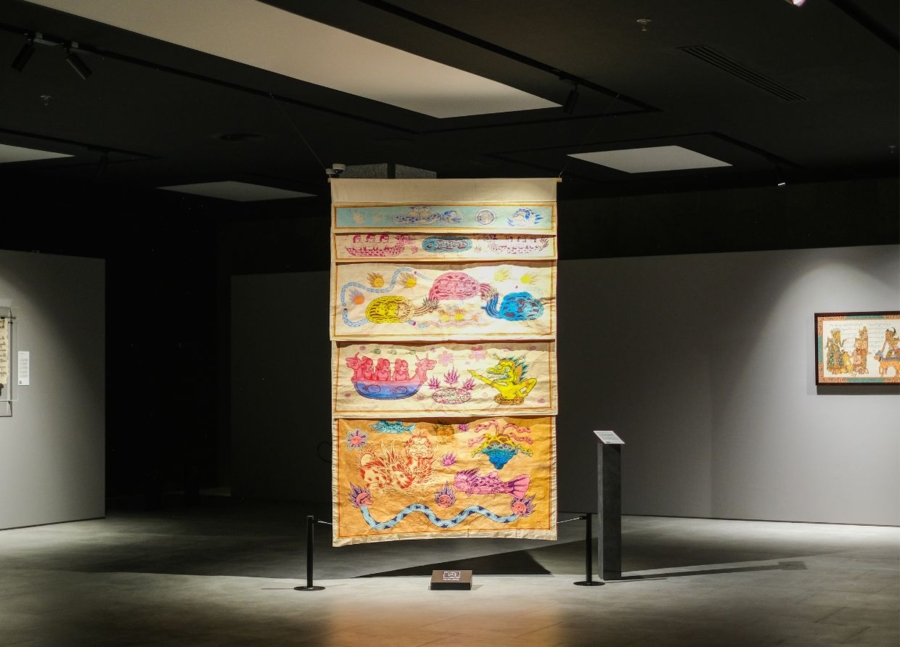
Credit : Communication Representation Scop3
How Old Is Balinese Painting, Really?
Here's the fact that surprises even Bali regulars: Kamasan is not where Balinese painting starts. A copper-plate inscription dated 1022 AD, kept at Puseh Temple in Batuan Village roughly 10 kilometers south of Ubud, already refers to the citrakara, or painter. That's nearly 500 years before Kamasan itself took shape meaning painting was a recognized profession on the island well before the style most tourists now associate with "traditional Bali."
The Indonesian government recognized Kamasan as Intangible Cultural Heritage in 2015, but this exhibition argues the tradition was never frozen in that recognition. Works made in the past five years turn Kamasan's visual grammar toward identity, ecology, technology, and the memory of the pandemic subjects the 16th-century Gelgel court never had to paint.