
INDONESIA'S TEMPEH IS GOING TO UNESCO — AND IT'S BEEN 500 YEARS IN THE MAKING
From banana-leaf stalls in Central Java to the world's most prestigious cultural heritage list, tempeh's journey is as rich as its fermented flavor.
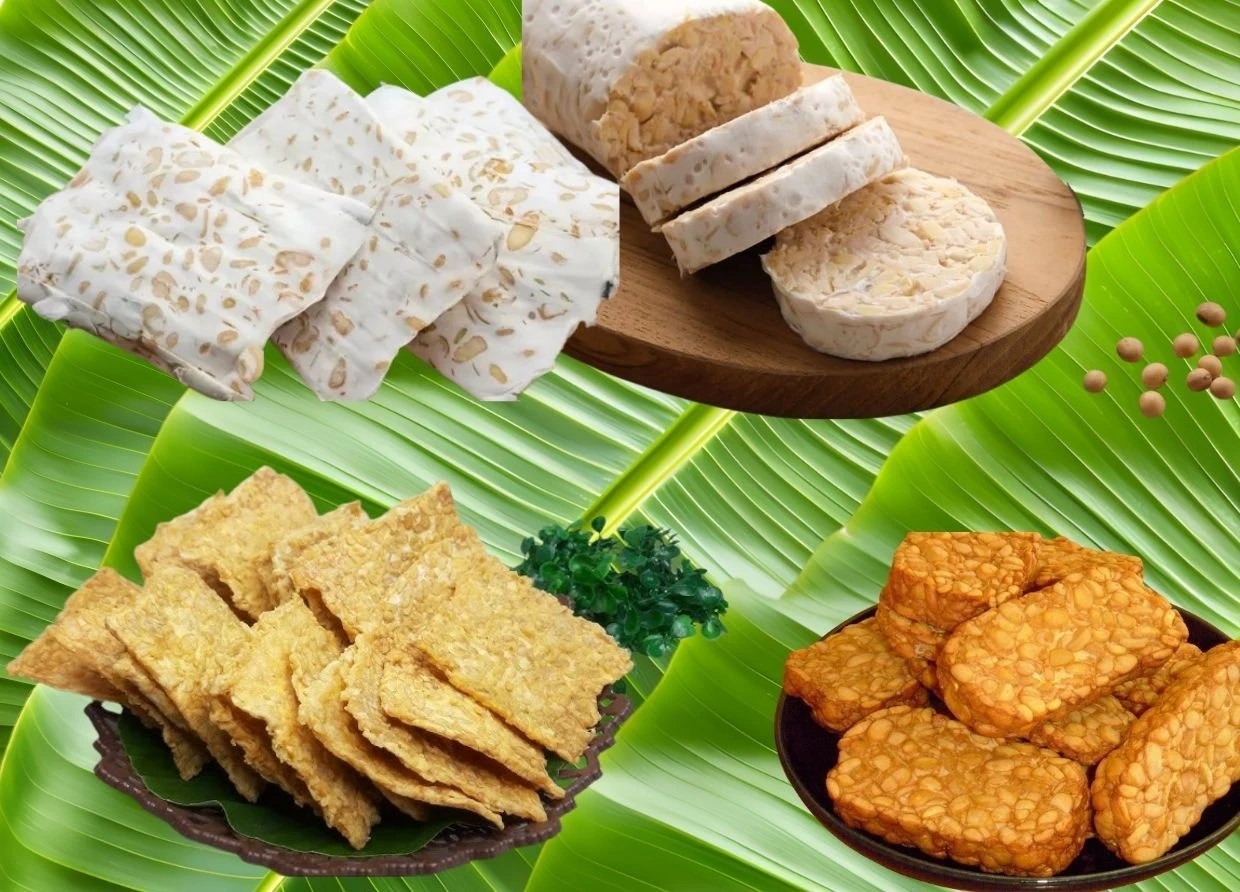





It starts with a soft press through banana leaves — that earthy, slightly mushroomy smell before anything hits the pan. For most Indonesians, it's just lunch. But for food scientists and cultural historians, that block of fermented soybean is now at the center of a global conversation.
Indonesia has officially submitted tempeh to UNESCO's Intangible Cultural Heritage list, a recognition that would cement what scholars have argued for years: tempeh is not just food, it's a living piece of Javanese civilization.
What Is Tempeh and Why Does it Matter ?
Tempeh is a fermented soybean cake made by culturing whole soybeans with the mold Rhizopus oligosporus, compressing the mixture, and letting it bind into a firm, protein-dense block over 24–48 hours. It is the only major soybean product that is native to Indonesia — not imported from China or Japan — and has been documented in Javanese manuscripts dating to the 16th century. Today it is sold from street stalls to presidential palace kitchens, usually fried, braised, or eaten alongside rice.
How Did Tempeh Get UNESCO Recognition?
The push began in 2014, led by two academics at IPB University in Bogor, West Java: Made Astawan, a food science and technology professor, and Hardinsyah, a nutrition researcher and member of Pergizi Pangan Indonesia, the national nutrition association.
Working alongside the Central Java Culture Agency, the pair assembled the documentation required to establish tempeh as a national intangible cultural heritage. In 2017, Indonesia's government formally awarded it that status — a mandatory step before any UNESCO application could move forward.
"Tempeh is the only soybean product that is native to Indonesia and has been known since the 16th century."
— Made Astawan, Food Science & Technology Professor, IPB University, Bogor, West Java
Is Tempeh Actually a Superfood?
Here's the counterintuitive part: what grandmothers in Java have been feeding their families for centuries turns out to be nutritionally extraordinary by modern standards. Astawan co-authored a study with Sastia Prama Putri, an associate professor of biotechnology at the University of Osaka, in which they used metabolomic analysis to examine multiple varieties of tempeh from across the Indonesian archipelago.
Their analysis identified a significant array of bioactive compounds in tempeh, including isoflavones — plant-derived compounds linked to reduced inflammation — and bioactive peptides associated with cardiovascular and metabolic health. The fermentation process, it turns out, doesn't just preserve the soybeans. It transforms them.
Where Can You Find Tempeh Beyond the Street Stall?
Beyond the iconic tempe goreng you'll find at every warung, fine dining restaurants across Jakarta and Yogyakarta have elevated the ingredient into something unrecognizable from its origins. Tempe orek — stir-fried with sweet soy and a caramelized crunch — has made it onto tasting menus. Tempe bacem, braised low and slow in palm sugar until nearly mahogany, is the kind of dish that makes Indonesian food writers argue it deserves its own Michelin category.
Internationally, tempeh has been gaining traction as a meat alternative, particularly in Europe and North America, where its high protein content and whole-food fermentation appeal to plant-based eaters. The UNESCO bid is expected to further accelerate that global visibility.