KWIBUKA32: RWANDA’S JOURNEY FROM GENOCIDE TO RENEWAL
Every April 7, Kwibuka32 marks Rwanda’s remembrance of the genocide and its journey toward renewal. From Kigali to Jakarta, candles are lit for a million lives lost — and a future that must never forget.



On April 7, 2026, in a hall in Jakarta, a Rwandan woman named Liliane Murangwayire stood up and told her story. The room went quiet. Outside, the city moved at its usual speed — commuters, food deliveries, Instagram reels. Inside, people were sitting with a question that doesn't have an easy answer: how do you remember something this large?
This is Kwibuka32 — the 32nd commemoration of the genocide against the Tutsi in Rwanda, now observed in cities across the world, including Jakarta.
What is Kwibuka, exactly?
Kwibuka is a Kinyarwanda word that means "to remember." It is the official 100-day period of national mourning and reflection in Rwanda, beginning each year on April 7 — the United Nations-designated International Day of Reflection on the Genocide against the Tutsi — and ending on July 3. During these 100 days in 1994, over a million Rwandan Tutsi were systematically killed by neighbors, by officials, and by state-backed militias. Rwandan embassies and diaspora communities globally organize commemorations throughout this period.
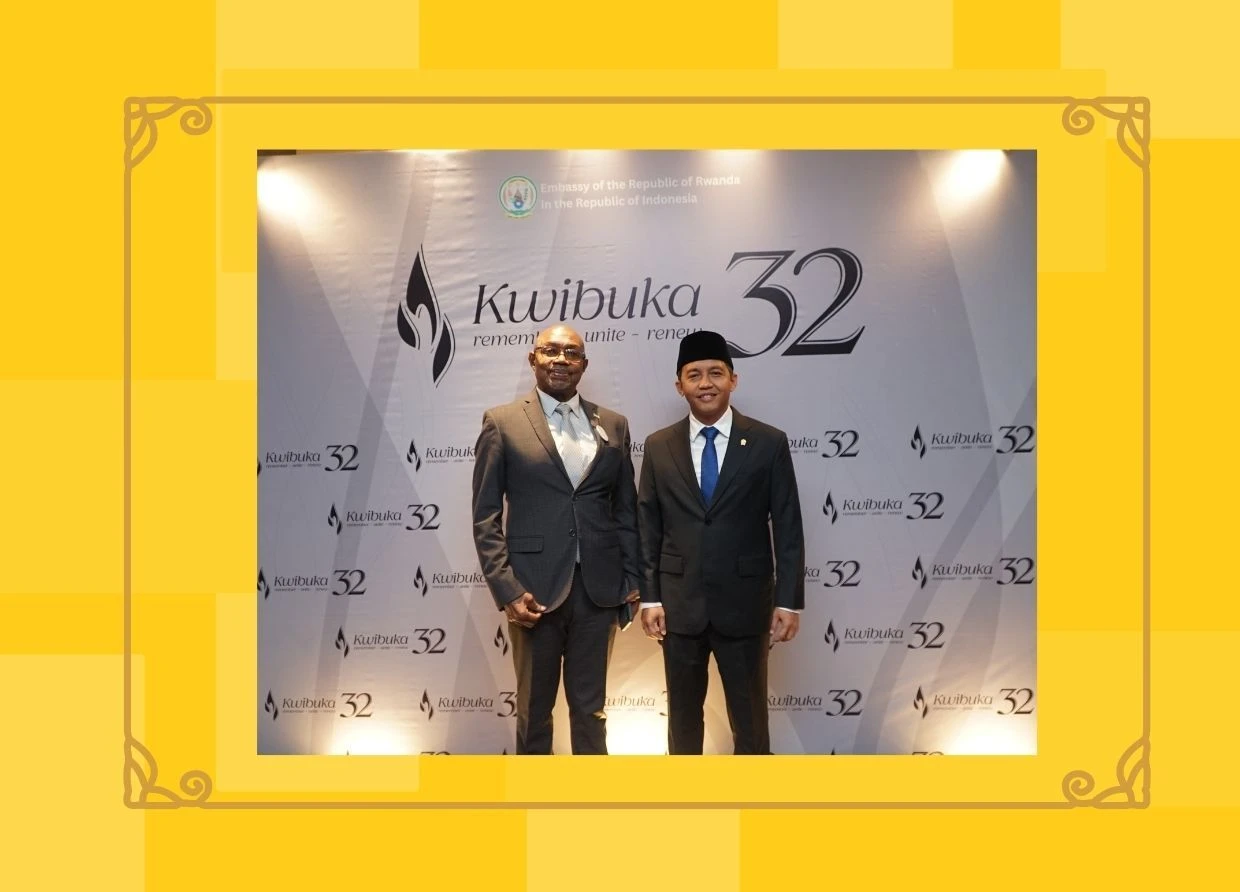
In Jakarta, April 7, 2026, the Embassy of Rwanda held a solemn ceremony attended by Indonesian government representatives, ambassadors, heads of international organizations, and friends of Rwanda. The 2026 theme: Remember, Unite, and Renew.
Why does Jakarta hold a commemoration?
Because forgetting is not neutral. The Ambassador of Rwanda to Indonesia made this clear in his speech: denial and revisionism haven't disappeared — they've simply moved from extremist radio broadcasts to algorithmically amplified social media. The refusal to use the correct term — "genocide against the Tutsi" — is itself a form of harm, one that dishonors the dead and emboldens those who would rewrite history.
Indonesia, as a member of the international community with deep commitments to human rights under ASEAN and the UN, has a stake in that conversation too.
What does "Remember, Unite, Renew" actually mean in 2026?
It's not ceremonial language. Each word carries weight. To remember means actively fighting genocide denial — including in diaspora communities abroad. To unite means demanding justice: perpetrators of the 1994 genocide are still living freely in.
various countries. One notorious mastermind, Fulgence Kayishema, evaded justice for more than two decades before being arrested in Cape Town, South Africa in 2023. He is accused of directing the killing of approximately 2,000 people sheltering inside a Catholic church. To renew means passing the responsibility to the next generation — young Rwandans and their allies — to carry the memory forward and build something better with it.
What is Rwanda's story 32 years later?
The country that was nearly destroyed is now one of Africa's fastest-growing economies, with one of the highest rates of women's parliamentary representation in the world, at over 60%. That transformation didn't happen by accident. It happened because Rwanda chose to rebuild on truth — an uncomfortable, specific, documented truth — rather than a softer narrative that might have been easier to sell.
The candle lit in Jakarta isn't just for Rwanda. It's a reminder that genocide doesn't begin with violence. It begins with language — with the slow normalization of dehumanization, with the refusal to name things correctly, with silence at the wrong moment. The commemoration asks us to notice when those patterns appear, wherever we are.