JAVAN RHINO CALF BORN IN UJUNG KULON: DESY’S FIFTH BABY
A Javan rhino calf was born in Ujung Kulon to mother Desy, caught on camera trap on 10 October 2026. Here is what it means for the species.




At a glance
- 5: calves born to mother Desy since 2013
- 1–2 months: estimated age of the new calf
- 87–100: Javan rhinos believed to remain
- 1: place on Earth where they live, Ujung Kulon
On 10 October 2026, a hidden camera in Ujung Kulon switched on in the dark. It filmed a grey shape wading through mud, and a much smaller shape following every step. The footage is grainy night-vision. The news inside it is not.
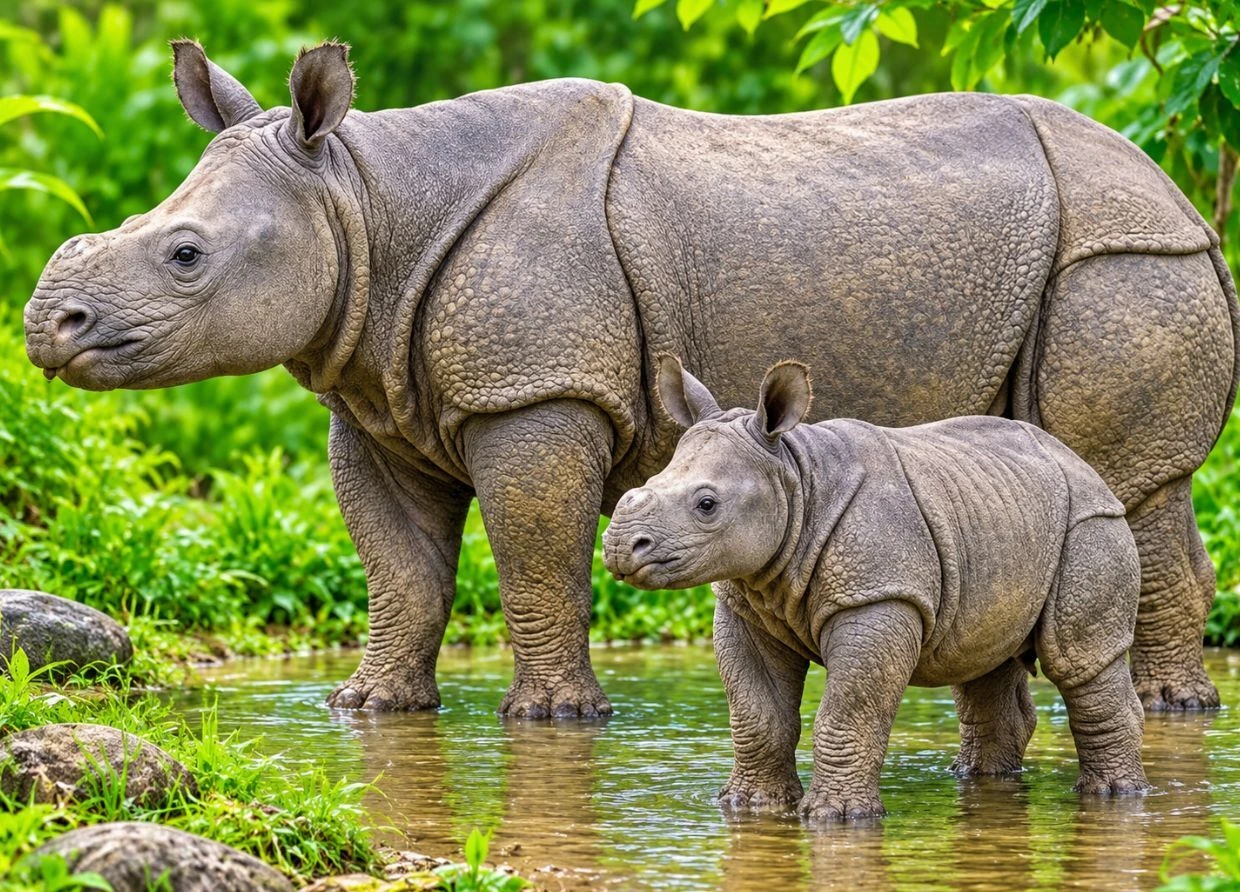
A Javan rhino calf, about 1 to 2 months old, was born in Ujung Kulon National Park (TNUK), Pandeglang, Banten. A camera trap recorded it on 10 October 2026 with its mother, Desy. Officials say it looks healthy and stays close to her. Only around 87 to 100 Javan rhinos (Rhinoceros sondaicus) are believed to remain, all in this one park.
View this post on Instagram
What Is the New Javan Rhino Calf in Ujung Kulon?
The calf is Desy’s fifth. Her earlier babies are Arjuna (2013), Arum (2015), Hawa (2018) and Syauki (2024). According to the Ministry of Forestry, the likely father is a male named Musofa.
This is also the second calf spotted in 2026. In February, cameras caught another mother and calf in the Cigenter block of the park.
Ardi Andono, head of Ujung Kulon National Park, described Desy this way, as reported by Koran Jakarta on 3 November 2026.
“Desy is in very good condition and experienced at raising calves.”
Why Does One Calf Matter So Much?
The Javan rhino is listed as Critically Endangered, and the entire wild population lives in a single park. That is a risky place to keep every egg in one basket.
The danger is real. In December 2018, a collapse of the Anak Krakatau volcano triggered a tsunami that hit coastlines including Ujung Kulon. Every new calf makes the population a little less fragile.
The park also faces human threats. In 2024, a court in Pandeglang convicted a group of rhino poachers. In 2026, the conservation group Auriga Nusantara reported that 15 rhinos had dropped out of camera monitoring in recent years. It suspects poaching is one reason.
How Do Rangers Find Rhinos in the Forest?
Mostly, they don’t see them. Javan rhinos are very sensitive to sound and smell, so few people ever meet one face to face.
Instead, the park relies on cameras. In 2024, rangers installed 126 camera traps across the peninsula. Even then, cameras are not perfect. On one patrol, rangers found a camera lying on the ground because a squirrel had chewed through its strap.
Here is the surprising part. A calf often officially “exists” only when a camera catches it. In 2015, cameras recorded three calves, yet surveys at the time never saw them in person.
What Happens Next for the Javan Rhino?
The birth comes during a debate about moving some rhinos. The government wants to develop a second habitat at Alas Purwo National Park in East Java, to reduce disaster risk at Ujung Kulon. That plan still needs scientific study.
Meanwhile, the Pandeglang regency government has said it rejects any relocation. It wants protecting the rhinos’ original home to stay the priority.
For now, a mother and her calf are walking through the same forest their species has used for thousands of years.