INDONESIAN BIOLOGIST DISCOVERS 350,000-YEAR DNA
Indonesian biologist Ezra Timothy Nugroho spent 57 days in Antarctica, uncovering 350,000-year-old DNA with a 23-member research team.
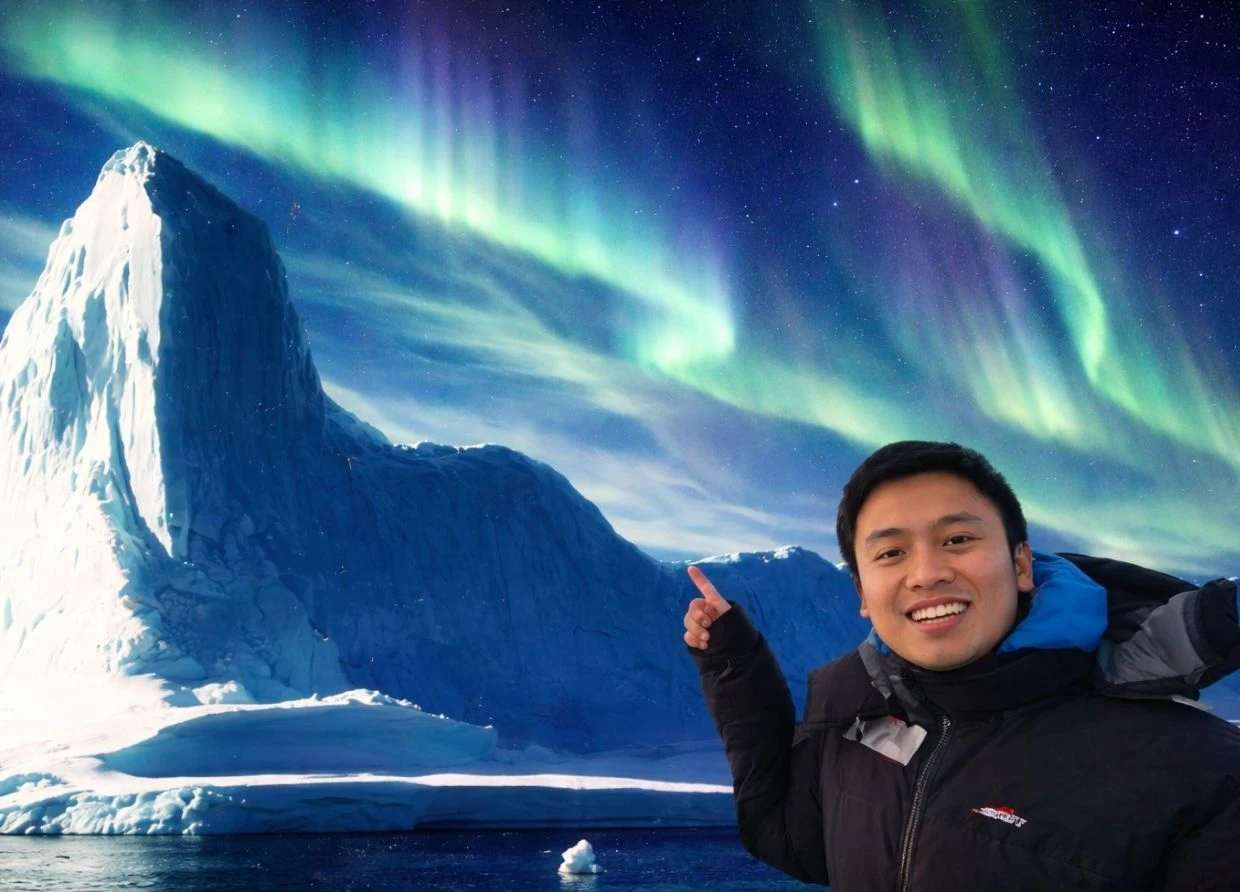





Who is Ezra Timothy Nugroho?
Ezra Timothy Nugroho is an Indonesian marine scientist and alumnus of the Biology program at Universitas Gajah Mada (UGM), Yogyakarta. He went on to pursue a master's degree at the Institute for Marine and Antarctic Studies (IMAS) in Australia — and in doing so, became the sole Indonesian representative on an international Antarctic expedition funded by the Australian Government.
The expedition, conducted aboard a scientific research vessel in Antarctic waters, brought together 22 researchers from across the world. Ezra was the only one flying an Indonesian flag.
What is sedaDNA — and why does it matter?
Ezra's research focuses on sedimentary ancient DNA, or sedaDNA — genetic material extracted from layers of ocean floor sediment that have been quietly accumulating for hundreds of thousands of years. Think of it as the ocean's own memory card, buried under layers of silt and ice-cold water.
From these sediment cores, Ezra successfully identified fragments of ancient marine mollusc DNA dating back between 6,000 and 350,000 years. That's not just old — it's a window into what marine ecosystems looked like long before human records existed.
What were the conditions like on the expedition?
This wasn't a research cruise with ocean views and quiet evenings. For 57 days, Ezra worked 12-hour shifts in temperatures that plunged to -15°C. The Southern Ocean — notorious among sailors — threw storms, high waves, and relentless wind at the vessel. The kind of cold that doesn't just chill you, it settles into your bones mid-shift and stays there.
The fact that he kept working through those conditions, extracting and preserving biological samples in a moving lab, says something that a CV never quite captures.
What's next for Ezra?
The Antarctica expedition wasn't just a research trip — it was also a launchpad. Ezra is set to continue to a doctoral program (S3) starting May, building directly on the sedaDNA work he began in the Southern Ocean. His research is quietly expanding what Indonesian science contributes to global marine biology.
For a country surrounded by two oceans, it's a reminder that Indonesia's future in ocean science might be written from the coldest place on Earth.